Kanagawa Emergency Contacts Guide 2026 — Police, Ambulance, Fire & 24-Hour Help Lines
Overview
Emergency Numbers
National Emergency Numbers
| Service | Number | Language Support | Hours |
|---|---|---|---|
| 🚔 Police | 110 | English (interpreters available) | 24/7 |
| 🚑 Ambulance / Fire | 119 | English (interpreters available) | 24/7 |
| 🌊 Coast Guard | 118 | Japanese (English limited) | 24/7 |
| 🆘 Emergency Helpline (English) | 03-5285-8181 | English | 24/7 |
Important: When calling 110 or 119, the operator will connect to an interpreter service. Stay calm, tell the operator “English please” or “Eigo onegaishimasu,” and wait for the interpreter to join the call.
Kanagawa-Specific Emergency Contacts
| Service | Phone | Hours | Notes |
|---|---|---|---|
| 🏥 Kanagawa Emergency Medical Info | 045-201-1199 | 24/7 | English, Chinese, Korean available |
| 🚑 Yokohama Emergency Services | 045-331-0119 | 24/7 | Multi-language medical consultation |
| 👮 Yokohama Police (English) | 045-211-1100 | 9:00-17:00 (weekdays) | Non-emergency inquiries |
| 🆘 Japan Helpline (English) | 0570-000-911 | 24/7 | Travel & medical emergencies |
| 🏦 Tokyo Medical Info (backup) | 03-5285-8181 | 24/7 | English-speaking medical referral |
When to Call
Call 110 (Police) When:
- You witness or experience a crime (theft, assault, harassment)
- You find a lost child or elderly person
- You see a traffic accident with injuries
- Someone is behaving dangerously or threateningly
- You need to report a lost item worth significant value
Call 119 (Ambulance/Fire) When:
- Someone is unconscious, not breathing, or has severe bleeding
- You see a fire, smoke, or gas leak
- Someone has a serious injury from a fall, traffic accident, or sports incident
- You need immediate medical transportation
- You suspect a heart attack, stroke, or severe allergic reaction
Call 118 (Coast Guard) When:
- You see someone in distress in the water
- You witness a boating accident
- You find suspicious objects on the beach
- You need sea rescue assistance
How Emergency Calls Work in Japan
Calling 110 (Police)
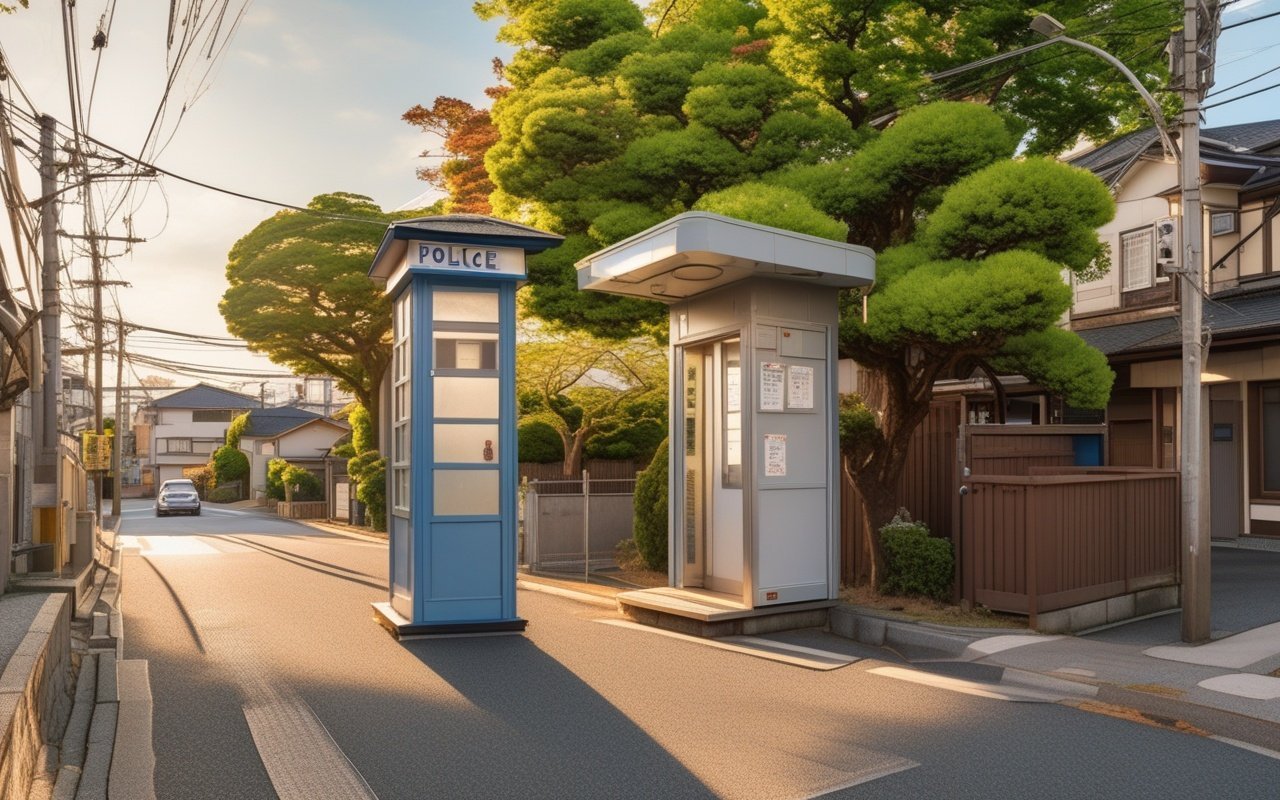
- Dial 110 from any phone (payphones, mobile, landline — all free for emergencies)
- Tell the operator “English please” or “Eigo onegaishimasu”
- Provide your location — if you do not know the address, describe landmarks, station names, or use GPS coordinates from your phone
- Describe the situation — what happened, is anyone injured, is there an ongoing threat
- Stay on the line until the operator tells you it is okay to hang up
- Wait for police at a safe location — an officer will arrive and may call you for updated location
Calling 119 (Ambulance/Fire)
- Dial 119 — the operator will ask: “Fire or ambulance?” (Kaji desu ka, kyukyu desu ka?)
- Say “Kyukyu” (ambulance) or “Kaji” (fire), then “English please”
- Provide your location — be as specific as possible
- Describe the emergency — injuries, symptoms, what happened
- Follow instructions — the operator may give first-aid guidance while the ambulance arrives
- Ambulances are free — there is no charge for ambulance transport in Japan
Ambulance cost: ¥0. Emergency ambulance transport is provided free of charge. Hospital treatment costs are your responsibility — ensure you have travel insurance.
🇯🇵 Key Japanese Emergency Phrases
| English | Japanese | Pronunciation |
|---|---|---|
| Help! | 助けて! | Tasukete! |
| Emergency! | 緊急です! | Kinkyū desu! |
| Call an ambulance! | 救急車を呼んでください! | Kyūkyūsha wo yonde kudasai! |
| There is a fire! | 火事です! | Kaji desu! |
| I need a police officer | 警察を呼んでください | Keisatsu wo yonde kudasai |
| I am injured | けがをしました | Kega wo shimashita |
| I need an interpreter | 通訳をお願いします | Tsūyaku wo onegai shimasu |
| Where is the hospital? | 病院はどこですか? | Byōin wa doko desu ka? |
Emergency Apps and Tools
Essential Apps
| App | Function | Language |
|---|---|---|
| Safety Tips (Japan Tourism Agency) | Earthquake early warnings, tsunami alerts, weather warnings, emergency shelters | English, Chinese, Korean |
| Japan Official Travel App | Emergency contacts, hospital finder, disaster info | English |
| Japan Travel by NAVITIME | Route planning with disaster detours, multi-language | English |
| Yurekuru Call | Earthquake early warning (down to intensity 1) | Japanese (useful for push alerts) |
Offline Preparation
- Download Google Maps offline for the Kanagawa area — useful when cell networks are congested after a disaster
- Save emergency contacts in your phone as “ICE” (In Case of Emergency)
- Print a card with your hotel address, emergency contact, and key Japanese phrases
- Register with your embassy — many embassies have free emergency registration for citizens traveling abroad
What to Do in Common Emergencies
Medical Emergency
- Call 119 for ambulance
- If you can travel independently, go to a hospital with English-speaking staff
- Recommended hospitals in Kanagawa:
- Marianna University Hospital (Kawasaki): 044-977-8111 — English-speaking staff
- Yokohama City University Hospital (Yokohama): 045-787-2800 — International clinic
- Kanagawa Children’s Medical Center (Yokohama): 045-711-2351 — Pediatric emergency
Traffic Accident
- Call 110 for police
- Call 119 if anyone is injured
- Do not move anyone who is seriously injured
- Take photos of the scene, vehicle positions, and any damage
- Exchange insurance information if driving
- Contact your travel insurance provider
🚨 Natural Disaster Preparedness in Kanagawa
Kanagawa is prone to earthquakes (like all of Japan), typhoons (August-October), and occasional tsunami risks along the coast. Here’s what to do for each:
Earthquake
| Situation | What to Do |
|---|---|
| Indoors | Drop, cover, hold on. Get under a sturdy table. Stay away from windows. |
| Outdoors | Move away from buildings, power lines, and vending machines. |
| On a train | Stay seated. Hold onto handrails. Follow crew instructions. |
| Near the coast | If the shaking lasts 30+ seconds, move to high ground immediately — tsunami may follow. |
| At a ryokan | Do NOT use elevators. Staff will guide you to evacuation area. |
Earthquake early warning: Your phone will receive a loud J-ALERT with a countdown (seconds to minutes before shaking starts). Drop and cover immediately when you hear it.
After the shaking stops:
- Check for injuries — call 119 for ambulance
- Turn off gas if you smell a leak
- Open doors for exit routes
- Follow evacuation instructions from local authorities
- Use the Safety Tips app for English-language updates
Typhoon
| Before Typhoon | During Typhoon | After Typhoon |
|---|---|---|
| Check Japan Meteorological Agency forecasts | Stay indoors | Watch for fallen power lines |
| Stock water and snacks (¥1,000-2,000) | Avoid coastal areas and rivers | Check train/bus status — delays common |
| Confirm hotel can extend stay | Follow hotel evacuation guidance | Be prepared for continued rain |
| Save offline maps (cell service may drop) | Keep away from windows during strongest winds | Monitor for aftershocks |
Typhoon season: Peak August-October. Most attractions close during typhoon warnings. Hotels are experienced with these events — they will provide guidance.
Tsunami
- If you feel strong shaking near the coast (or receive a tsunami warning), move inland AND to high ground immediately
- Do not wait for official instructions — every second counts
- Jogashima, Enoshima, and Shonan beaches are at risk; evacuation routes are marked with yellow and green signs Book your stay at Enoshima Hotel — seaside accommodation with stunning ocean views
- Tsunami warnings are broadcast in English on NHK World and via the Safety Tips app
📇 Emergency Contact Card Template
Print or screenshot this card and keep it in your wallet:
--- EMERGENCY CARD ---
Name: [Your Name]
Hotel: [Hotel Name]
Address: [Hotel Address in Japanese]
Phone: [Hotel Phone]

EMERGENCY NUMBERS:
Police: 110
Ambulance/Fire: 119
Japan Helpline: 0570-000-911 Medical Info (English): 045-201-1199 Blood Type: [Your Blood Type]
Allergies: [Your Allergies]
Insurance: [Provider + Policy #] Emergency Contact: [Name + Phone]
---
📱 Emergency App Quick Setup
Before you arrive in Japan, take 10 minutes to set up these essential apps:
| App | Setup Steps | Why You Need It |
|---|---|---|
| Safety Tips | Download → Allow notifications → Grant location access → Select English language | Earthquake warnings, tsunami alerts, shelter locator (works offline) |
| Google Maps | Download Kanagawa offline map → Save your hotel as a labeled pin | Navigation when cell networks are congested after a disaster |
| NHK World | Download → Enable push notifications for breaking news | English-language live coverage of disasters, press conferences from Japanese authorities |
| LINE | Create account → Share your location with a friend/relative | Most Japanese people use LINE for emergency communication — local authorities broadcast updates through LINE official accounts |
💡 Smartphone Emergency Settings
- Medical ID: Set up your iPhone Medical ID (Health app) or Android Medical Info (Personal Safety app) with blood type, allergies, and ICE contacts — accessible from the lock screen without unlocking your phone
- Screen message: iPhone users: set your lock screen to show “In case of emergency, call [ICE contact]” (Settings → Emergency SOS → Health Profile)
- Airplane mode: After the initial shake, your phone may lose signal due to network congestion. Switch to Airplane mode for 10 minutes, then try again. SMS messages sometimes go through when data doesn’t.
Frequently Asked Questions
Q: How can I stay informed during an emergency in Japan?
A: Download the Safety Tips app by the Japan Tourism Agency for earthquake and tsunami warnings in English. Register with your embassy for emergency notifications. NHK World provides English-language disaster coverage. Most mobile phones in Japan receive emergency alerts automatically (J-ALERT) with English text.
Q: What are the most important emergency numbers?
A: Dial 110 for police and 119 for ambulance or fire services. English-speaking operators are available 24/7. For non-emergency police assistance, visit a koban (police box) — there are over 6,000 in Kanagawa. The Japan Helpline (0570-000-911) offers 24/7 English support for tourists.
Q: Where are emergency shelters in Kanagawa?
A: Emergency shelters (hinanjo) are located at schools, community centers, and public halls. The Safety Tips app shows the nearest shelter on a map. Major evacuation centers include Yokohama Arena (capacity 17,000) and Yokohama International Stadium (72,000). Yellow and green signs mark shelter locations throughout the city.
Q: What should I include in my emergency kit?
A: Carry a small day-bag with: water bottle, snacks, portable charger, whistle, copy of passport and hotel address in Japanese, and ¥10,000-20,000 in small bills. Convenience stores stock emergency supplies, During typhoon season (June-October), also pack a rain jacket and waterproof bag for electronics.
Q: Is travel insurance recommended for Kanagawa?
A: Yes, comprehensive travel insurance is strongly recommended. It covers medical emergencies (including hospital visits), trip cancellation, lost luggage, and emergency evacuation. Some Japanese hospitals require upfront payment or proof of insurance before treatment. Keep your insurance card and a digital copy of your policy accessible at all times.
My personal exploration of Kanagawa has been incredibly rewarding, and I recommend adding this region to any Japan travel itinerary — the variety of experiences within short distances is what makes it special.
Kanagawa Emergency Contacts Guide 2026 —… is your starting point for exploring this part of Kanagawa. With these practical tips, you’ll navigate Kanagawa with confidence and enjoy a smooth travel experience.
For more guides, check out our other articles covering Hakone, Kamakura, Yokohama, Shonan, and the Miura Peninsula. Stay at Kamakura Prince Hotel — seaside resort with panoramic Sagami Bay views & free shuttle from station
Packing Essentials
For a trip to Kanagawa, pack comfortable walking shoes as you will be on your feet exploring temples, shrines, and neighborhoods. A reusable water bottle is essential – tap water is safe to drink. A small umbrella or light rain jacket is useful year-round. Power banks are recommended since you will rely on your phone for maps. A small daypack for daily essentials makes sightseeing more convenient.
Conclusion
exploring Kanagawa can be as relaxed or as packed as you want it to be, and I have found that the best visits leave room for both planning and spontaneity. During my visit I went with a rough plan and found that leaving room to wander made the trip far more memorable. Use this guide to sort out the logistics in advance, then let the day surprise you — Kanagawa rewards travelers who stay curious.