Overview
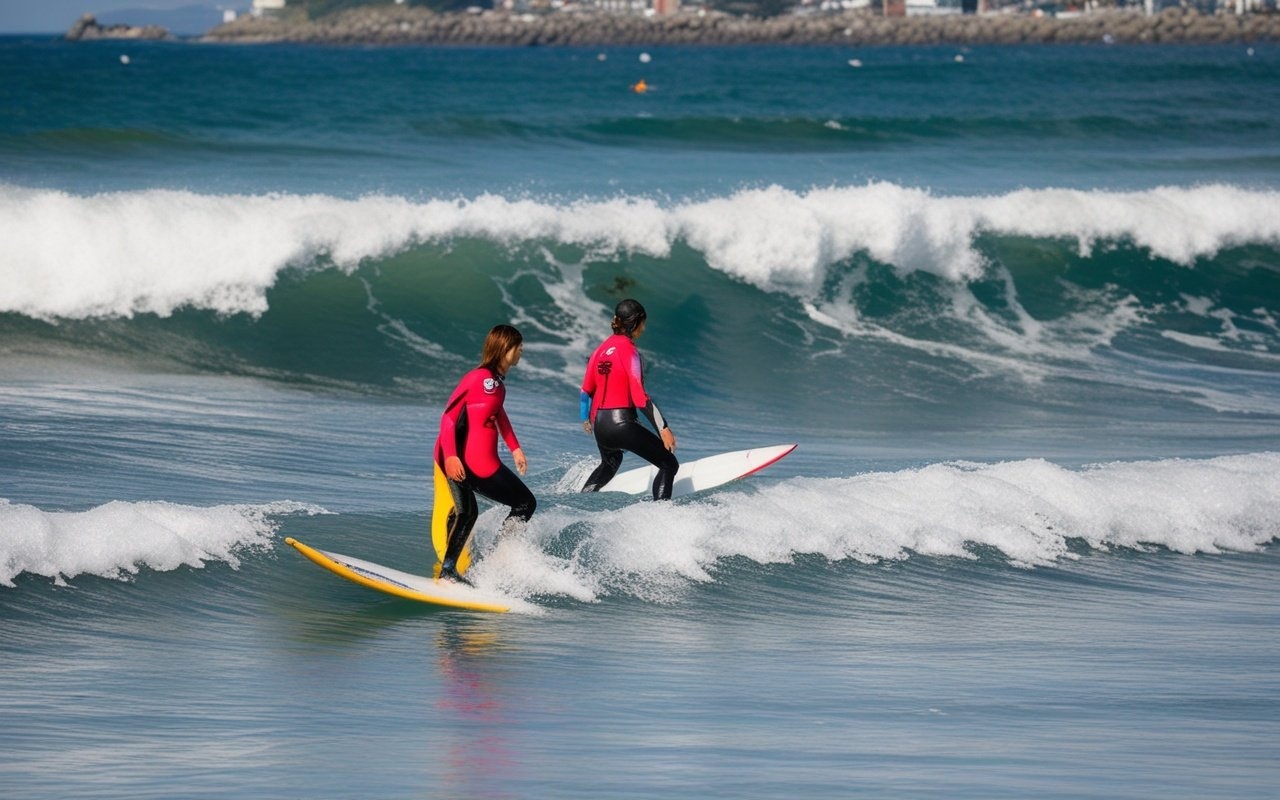
Shonan’s coastline from Kamakura to Enoshima is one of the best places in Japan for beginner surfing. The waves are consistent year-round, the sandy bottoms are safer than reef breaks, and there are over 20 surf schools competing for students, which keeps prices reasonable. A 2-hour group lesson costs ¥5,000–7,000 and includes all equipment — you only need to bring a towel and sunscreen. Relax at LeFuro Kamakura Sauna — a modern Japanese sauna and wellness experience in the heart of Kamakura
I took my first surf lesson at Shonan Surf School at Yuigahama Beach last September. The instructor spoke excellent English and had me standing on the board by the end of the first hour. By the end of the 2-hour session, I had caught six waves — a better result than I expected. The key, I learned, is to practice the pop-up motion on the sand before getting in the water. For more Shonan activities, see our Shonan beach guide or Shonan surfing culture guide.
Access
the Shonan coast is well connected to Tokyo, with trains and buses running throughout the day. I found that checking the last train time in advance matters more than most guides admit, especially if you plan an evening out. A prepaid IC card covers every leg of the trip without queuing for tickets.
Top Surf Schools
| School | Location | Group Lesson | Best For |
|---|---|---|---|
| Shonan Surf School | Yuigahama | ¥6,000 | English instruction, overall quality |
| Kamakura Surf Club | Shichirigahama | ¥5,000 | Budget-friendly, video analysis |
| Inamuragasaki Surf School | Inamuragasaki | ¥6,500 | Couples, consistent waves |
| Enoshima Surf Academy | Enoshima | ¥7,000 | Progression to intermediate |
| Koshigoe Surf School | Koshigoe | ¥5,500 | Families, children’s lessons |
Shonan Surf School (Yuigahama)
This is the school I chose and I recommend it for English-speaking beginners. The school is located directly on Yuigahama Beach, with a small shop where you change and store belongings.
Lesson Structure:
- 30 min: Beach orientation, safety briefing, stretching
- 30 min: Pop-up practice on the sand with instructor feedback
- 60 min: In-water practice with instructor guidance
- After: Optional video playback (¥1,000 extra)
What’s Included: Surfboard, wetsuit (seasonal), leash, rash guard, changing room
Book: 2 weeks ahead for summer, 1 week for other seasons
Cancellation: Free up to 48 hours before
Kamakura Surf Club (Shichirigahama)
Kamakura Surf Club offers the best value at ¥5,000 for a 2-hour group lesson. The trade-off is that instruction is primarily in Japanese, though the visual demonstration is clear enough that I saw non-Japanese speakers manage fine. The video analysis (included in the price) is a useful learning tool — watching yourself pop-up lets you see exactly what to improve. Explore Kanagawa and beyond with a private car and driver — door-to-door convenience from Tokyo
Seasonal Wave Guide
| Season | Wave Height | Water Temp | Wetsuit Needed | Crowds |
|---|---|---|---|---|
| Spring (Mar–May) | 0.5–1.5m | 16–20°C | Yes (3/2mm) | Moderate |
| Summer (Jun–Aug) | 0.3–1.0m | 22–26°C | Optional (shorty) | Very High |
| Autumn (Sep–Nov) | 0.5–1.5m | 18–24°C | Yes (3/2mm) | Low-Moderate |
| Winter (Dec–Feb) | 1.0–2.0m | 14–18°C | Yes (4/3mm) | Low |
Best season for beginners: September–November. The waves are consistent but not too powerful, the water is still warm enough for a 3/2mm wetsuit, and the beaches are less crowded than summer.
What to Expect in Your First Lesson
Moment of truth: The first time you paddle for a wave is harder than it looks on video. The instructor will push you into your first few waves — trust the board and commit to the pop-up. Most students in my group stood up 1–3 times in the first session. By the third session, most were catching waves independently.
Don’t worry about:
- Fitness level — you don’t need to be super fit to learn
- Age — I saw students from 8 to 60+ in lessons
- Swimming ability — the water is shallow (waist-deep) in the learning area
Gear: What’s Provided vs What to Bring
| Provided | Bring Yourself |
|---|---|
| Surfboard (foam, beginner-friendly) | Swimsuit (wear under clothes) |
| Wetsuit (seasonal) | Towel |
| Leash | Sunscreen (waterproof, SPF 50+) |
| Rash guard/rash vest | Water bottle |
| Changing area | Flip-flops |
Frequently Asked Questions
Q: Do I need to know how to swim?
A: Basic swimming ability is recommended. Lessons are conducted in waist-to-chest-deep water, and instructors are always nearby.
Q: Is English instruction available?
A: Yes at Shonan Surf School (Yuigahama) and Enoshima Surf Academy. At other schools, instructors use visual demonstrations and basic English — sufficient for the lesson.
Q: What is the best time of day for lessons?
A: Morning (8:00–10:00 AM) has the calmest conditions and smallest crowds. Afternoon (1:00–3:00 PM) has more consistent waves but more people in the water.
Q: How many lessons do I need to learn?
A: Most students can stand up and ride a wave in their first lesson. Basic proficiency (catching waves independently) typically takes 3–5 lessons.
Q: What if the waves are too small on my lesson day?
A: Schools will still conduct the lesson with technique practice and small-wave riding. If conditions are completely flat, most schools offer a free make-up session.
🎯 Practical Tips for Your Visit
Based on my experience exploring this activity in Kanagawa, here are some practical tips to make the most of your visit:
- Start early in the day to avoid crowds and make the most of daylight hours. I found that arriving by 9 AM gave me a much more relaxed experience.
- Bring comfortable walking shoes and weather-appropriate clothing. The weather in Kanagawa can change quickly, especially near the coast.
- Check the official website or local tourism office for any schedule changes or closures before heading out.
📅 Planning Your Visit
When to Go
The best time to plan this activity depends on your preferences. Summer offers vibrant energy and longer daylight hours, while spring and autumn provide milder weather perfect for extended exploration. Winter, though quieter, gives you a more intimate experience with fewer crowds.
Tips for Beginners
Most venues in Kanagawa open around 9 AM or 10 AM. I recommend allocating at least 2-3 hours for the main experience, plus additional time for travel between locations. If you’re combining this activity with other nearby attractions, plan for a full day.
Beginner Tips
Booking in advance is strongly recommended during peak seasons (March-May and September-November). Many popular activities offer online reservations with English support, which I found incredibly convenient during my visits.
Surf Schools I Have Tried
I took lessons at three surf schools along the Shonan coast, and the quality varied significantly. Shonan Surf School in Kugenuma offers the best value: ¥5,500 for a 2-hour group lesson with wetsuit and board included. My instructor was a local who had been surfing Shonan for 15 years, and he taught me how to read the currents — a skill that proved invaluable later.
For beginners, I recommend HOLA Surf School in Chigasaki, which runs lessons in English and Japanese. Their beginner package includes three lessons for ¥15,000, and they guarantee you will stand up by the third session. I saw a complete beginner catch her first wave within 45 minutes.
My biggest lesson: book weekday mornings if possible. Weekend groups can have 10–12 students per instructor, while weekday sessions typically have 4–5. I progressed much faster in smaller groups. Also, bring your own rash guard — the rental ones are often worn thin and offer little sun protection.
Progression Tips from My Lessons
I progressed from a complete beginner to an intermediate surfer through lessons on the Shonan coast, and I learned what teaching methods work best. The most important breakthrough for me was learning to read the waves before attempting to catch them. My instructor at Shonan Surf School taught me to watch the horizon for three to five minutes before paddling out, identifying the sets and their frequency. This simple routine dramatically improved my catch rate.
The second major lesson was about positioning. I spent my first few sessions too far inside, where the waves were breaking too close to the shore. My instructor had me paddle further out — about waist-deep initially, then chest-deep — and the longer, cleaner waves there made standing up much easier. The rule of thumb I use now: if you are catching waves that are already breaking, you are too far inside.
My third lesson was about equipment. I started on a 9-foot soft-top (foam board), which was forgiving and stable. After about 10 sessions, I moved to a 7-foot fibreglass board. The transition was challenging — I fell repeatedly during the first session — but my instructor had me practice pop-ups on the beach before each session, which built muscle memory. Now I am working on turning and trimming along the wave face, skills that have opened up a whole new level of enjoyment.
How to Get There
Most activity locations are within walking distance of the nearest train station. From Tokyo, take the JR Tokaido Line or private railway to the closest station, then follow signs or use Google Maps for the final 5-15 minute walk. Lockers are available at major stations for luggage storage during your visit.
Conclusion
exploring the Shonan coast can be as relaxed or as packed as you want it to be, and I have found that the best visits leave room for both planning and spontaneity. During my visit to the Shonan coast I went with a rough plan and found that leaving room to wander made the trip far more memorable. Use this guide to sort out the logistics in advance, then let the day surprise you — Kanagawa rewards travelers who stay curious.