
Hadano & Mount Oyama: Spring Water, Soba, and a Mountain Day Trip
Overview
When most visitors to Kanagawa plan a day away from Tokyo, they head straight for Kamakura or Hakone. I did the same on my first four trips. But on a rainy weekend when the Shonan beaches were buried in cloud, a friend who grew up in the prefecture suggested something different: “Go inland to Hadano. The water there is the best in Kanagawa, and Mount Oyama is the mountain people forget.”
She was right, and I have been back three times since. Hadano is a compact basin town tucked between the Tanzawa mountain range and the Oyama ridge, roughly 90 minutes from central Tokyo by train. It is famous for two things that sound mundane until you experience them: water and mountains. The town sits on one of the richest spring-water tables in the Kanto region, with over 40 public spring points feeding the streets, and the guardian mountain of Oyama (1,252 m) has been a place of worship for over a thousand years.
What makes a Hadano trip work so well is the contrast. In the morning you can ride the Mount Oyama cable car through cedar forest and stand at the summit shrine with a clear view of Sagami Bay. By early afternoon you are back at street level, drinking water straight from a stone fountain that has been running for centuries, and finishing with a bowl of soba made with the same water you just tasted.
This guide covers the Oyama pilgrim route, the town’s spring-water culture, where to eat, and the practical details — transport, costs, and how to combine Hadano with a small-city day trip on the Odakyu Line.

📍 Getting There
Hadano sits on the Odakyu Odawara Line, which connects Shinjuku directly to the town. There is no shinkansen and no airport link, which is precisely why the town stays calm even at the height of summer. Access from Tokyo is straightforward and well signposted in English at both stations.

From Tokyo
- Odakyu Limited Express from Shinjuku (75-85 min, ¥1,000-1,200) — Take a Limited Express bound for Odawara or Hakone-Yumoto and get off at Hadano Station. The Romancecar adds a reserved seat and a 10-15 minute saving for about ¥500 more.
- JR Tokaido Line via Odawara (100 min, ¥1,300) — Take the Tokaido Line from Tokyo Station to Odawara, then the Odakyu Line back two stops to Hadano. This route is useful if you are combining Hadano with an Odawara castle visit.
- Odakyu Romancecar (65-75 min, ¥1,500) — The easiest option for families, with guaranteed seats and a snack counter on board.

Getting to Mount Oyama
From Hadano Station, the Oyama cable car base (Oyama Cable Station) is about 25 minutes by bus (¥400, roughly hourly). The bus drops you at the cable car terminal, where a funicular climbs 700 m of mountainside in about 6 minutes (¥1,100 round trip).
You can also walk the old pilgrimage path from the foot of the mountain — a stone staircase that pilgrims have climbed since the Edo period. It takes 2-3 hours and is rewarding, but it is steep enough that I recommend the cable car up and the path down on your first visit.
Money-Saving Tickets
If you are coming from Tokyo, the Odakyu Free Pass covers the round trip plus unlimited Odakyu rides — useful if you want to combine Hadano with a same-day stop in Odawara or even Hakone. For the mountain itself, the cable car round-trip ticket at the window is the simplest option; there is no separate attraction pass needed for the shrines.

⛰️ Mount Oyama: The Mountain of a Thousand Years of Faith
Why Oyama Matters
Oyama is one of the great pilgrimage mountains of the Kanto plain. The Oyama Afuri Shrine at the summit has been a center of rain-prayer and mountain worship since the Heian period, and during the Edo era the approach to the mountain was so busy that guidebook-style travel brochures were printed for pilgrims — the Tokaido’s most popular mountain after Fuji itself.
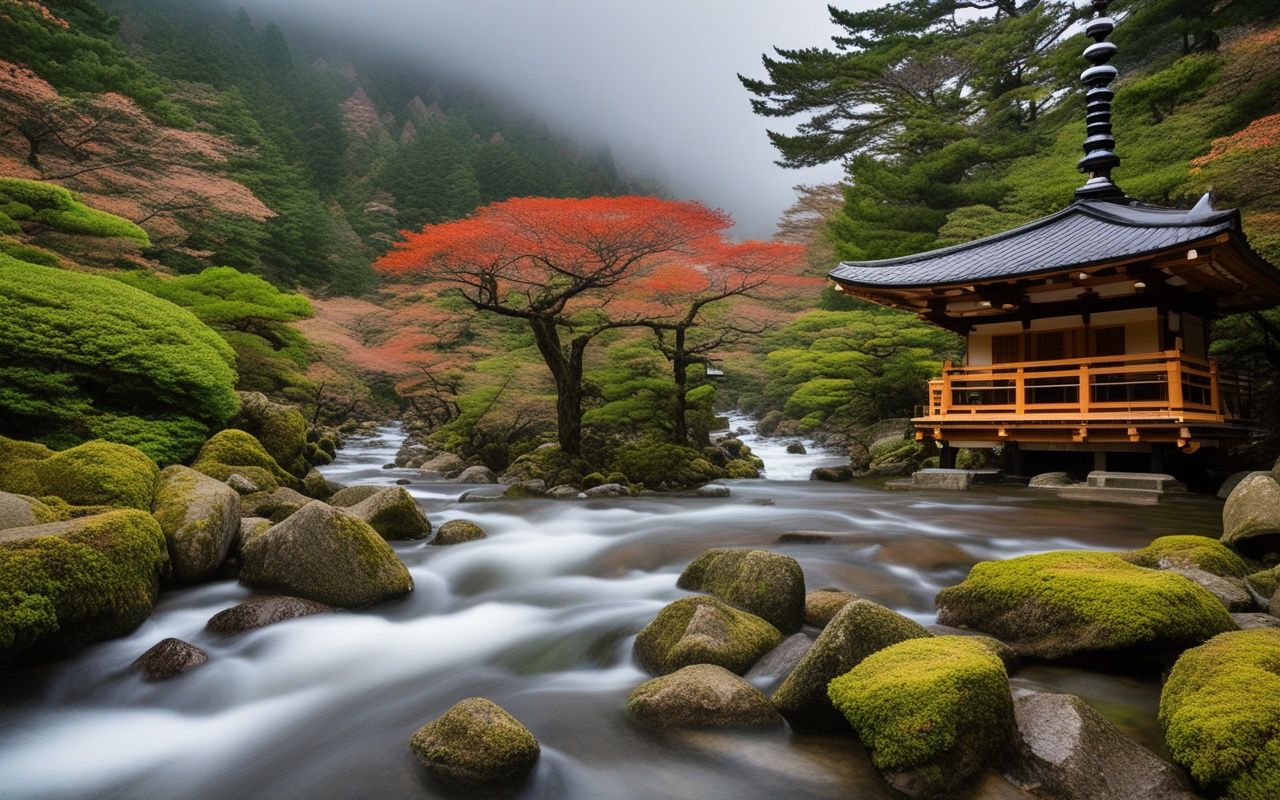
What strikes me every time is how the mountain manages to feel both sacred and welcoming. The cable car ride is short, but the moment you step out at the upper station, the air changes — cooler, quieter, and scented with cedar. A 20-minute forest path leads to the summit shrine, and the view from the observation point is one of the best in the prefecture: Sagami Bay curving away to the south, the Miura Peninsula on the horizon, and on clear winter days a full sweep of the Tanzawa range behind you.
The Route in Detail
- Oyama Cable Car (6 min each way) — The funicular climbs through thick cedar forest. Sit on the left side going up for the best view of the valley. Round trip ¥1,100.
- Oyama Afuri Shrine Main Hall (20 min walk from the upper station) — The main shrine building was rebuilt in 2004 and retains the dramatic crimson-and-gold style of the original. The shrine offers goshuin (calligraphy stamps) at the counter near the main hall for ¥500.
- Summit Observation Point (10 min beyond the shrine) — This is the spot for Fuji views on clear days. In summer the trees block much of the view; in winter and early spring, the mountain appears framed by the ridge. I saw Fuji perfectly on a February visit and only a hazy outline in July.
- The Pilgrim Staircase Descent (2-3 hours down) — The old stone path to the foot is lined with tea houses and stone lanterns that date from the Edo era. Several of the tea houses serve simple mountain meals (tofu dengaku, soba) if you time your descent around lunch.
Practical Notes for the Mountain
- Cable car hours: roughly 9:00-17:00, with seasonal variation. Check the board at the base before committing.
- Crowd strategy: Go on a weekday or arrive before 10:00. On sunny weekends in October (foliage season), the cable car line can reach 40 minutes.
- Footwear: The forest path to the shrine is well maintained, but the descent stairs are uneven. Running shoes are fine; sandals are not.
- Weather: The mountain creates its own weather. I have been up in light rain and the path becomes slippery; check the forecast and bring a light shell.
💧 Hadano’s Spring Water Culture
The Basin That Filters Everything
Hadano’s secret is geology. The town sits in a basin where rainwater from the Tanzawa and Oyama mountains filters through ancient gravel beds, emerging as naturally filtered spring water that the local government measures constantly. The result is soft, clean water with almost no mineral aftertaste — the kind that Japanese restaurants pay premiums for, and that the town’s tofu, soba, and sake makers all rely on.
I did not fully appreciate this until my second visit, when I started paying attention. Every public spring point has a plaque describing the water’s origin, and locals carry plastic bottles to fill up. It is a small ritual that makes you slow down.
The Best Spring Points to Visit
- Hadano Station’s Underground Spring Gallery (free) — In the station building itself, a small display shows the basin’s water system with a working model. Good first stop to understand what you are about to taste.
- Sohara Spring (Sohara no Izumi) (free) — The most famous spring point in town, set in a small park with a wooden scoop. The water here is exceptionally soft; locals say it is best drunk cold on the spot. It is a 10-minute walk or short bus ride from Hadano Station.
- Kumozawa Spring Park (free) — A larger green space with multiple spring points and picnic tables. This is the spot I would bring children; there is room to run, and the water channels are shallow and safe.
- Oyama Foot of the Mountain Springs — Several springs run near the cable car base, traditionally used by pilgrims to purify before climbing. Water is drinkable at the marked points.
A Tasting Note
One thing that surprised me: water from different points actually tastes slightly different. The Sohara spring is almost sweet; the station-side points have a crisper, cooler profile. Tasting them side by side is a genuine activity, not a gimmick — and it is free.
🍜 Eating in Hadano
Hadano’s food culture is built on its water: soba, tofu, and sake that all taste unmistakably clean.
Soba
- Soba shops along the Oyama approach — Several long-established shops serve hand-cut soba made with local spring water. The classic order is mori soba (cold, dipped) with a side of tempura. Expect ¥1,000-1,500 for a set.
- Town-center soba — Near Hadano Station, family-run shops serve cheaper sets in the ¥800-1,200 range. The broth is lighter than Tokyo’s, which lets the buckwheat flavor through. I found the contrast striking after years of eating hearty Tokyo soba.
Tofu and Vegetables
- Oyama tofu — The mountain’s tofu is legendary among pilgrims. Firm, dense, and faintly sweet, it is served grilled with miso (tofu dengaku) at tea houses on the descent path and at restaurants near the cable car base.
- Hadano vegetables — The basin’s clean water produces excellent greens. Look for seasonal vegetable sets at the station-adjacent market hall (Hadano Otomekan), which also stocks local pickles and wasabi.
Sake Connection
Hadano’s water quality made it a natural brewing town, and several of Kanagawa’s sake breweries use water sourced from the Tanzawa basin. For the full story, see my guide to Kanagawa’s sake breweries, where I compare the region’s spring-water breweries and tasting rooms.
🗓️ Sample Itinerary: The Best of Hadano in a Day
Morning (9:00-13:00)
- 9:00 — Arrive at Hadano Station. Grab a coffee and check the spring-water gallery in the station building.
- 9:30 — Take the Oyama bus to the cable car base (25 min).
- 10:00 — Ride the cable car up and walk the forest path to the summit shrine (20 min). Spend 30-45 minutes at the shrine and observation point.
- 11:30 — Start the descent on the pilgrim staircase. Stop at a tea house for tofu dengaku or soba around 12:30.
- 13:00 — Bus back to Hadano Station.
Afternoon (13:30-17:00)
- 13:30 — Walk to Sohara Spring and taste the water (10 min walk from the station).
- 14:15 — Visit Kumozawa Spring Park for a slower pace, or browse the Otomekan market hall for local produce.
- 15:30 — Late soba or sweet-bean dessert (anmitsu) in the town center. The local anmitsu shops use spring-water kanten jelly.
- 16:30 — Return train to Tokyo. If the weather is clear and you have energy, consider an overnight version combining Hadano with the Odawara castle town one station away.
If You Have More Time
- Overnight option: A handful of small ryokan-style inns near the Oyama base offer mountain views and kaiseki-style dinners. Book well ahead for foliage weekends.
- Combine with Odawara: Odawara Station is two Odakyu stops past Hadano. The Odawara castle and its surrounding town make an easy half-day add-on.
- Tanzawa extension: For experienced hikers, the ridge from Oyama continues into the Tanzawa range. The full traverse requires a full day and proper equipment — see the Tanzawa and Oyama hiking guide for routes and safety notes.
📅 Seasonal Notes
- Spring (Mar-May): Cherry blossoms at the Oyama approach and the town’s riverside paths. Fuji views begin to clear by late April.
- Summer (Jun-Aug): Green, humid, and quiet. The shade of the cedar forest is a relief, and the springs are at their coldest. Soba is the perfect summer lunch.
- Autumn (Oct-Nov): The best season overall. Foliage on the mountain, clear air, and the most reliable Fuji views. Expect weekend crowds.
- Winter (Dec-Feb): Crisp, cold, and empty. This is the season for the clearest views of Sagami Bay and Fuji, and the town’s sake and hot soba are at their most appealing.
💡 Practical Tips
- Fill a bottle at the springs — Bring an empty water bottle; every major spring point has a public tap. It is free, delicious, and one of the trip’s best souvenirs.
- Check cable car hours before going — Hours shrink in winter. The schedule is posted at the station information desk.
- Carry cash — Tea houses on the mountain and many town-center shops are cash-only.
- Beware the stairs — The descent path is beautiful but steep. Allow 2-3 hours and go slowly if you have knee trouble.
- Respect the water — The springs are drinking water, not paddling pools. The locals are friendly, but the plaques ask visitors to keep the points clean.
Conclusion
Hadano is the rare Kanagawa day trip that rewards you for going slow: a mountain that has been climbed by pilgrims for a thousand years, water so clean the town drinks it straight from the ground, and food that tastes like the landscape it came from. It is not the easiest destination to reach — the extra hour beyond Kamakura keeps the crowds away — and that is exactly its value. Whether you ride the cable car to the summit shrine or simply spend an afternoon tasting spring water and soba, you will leave with something most visitors to the prefecture never find: a quiet corner of Japan that still belongs to itself.
FAQ
Q: Is Mount Oyama suitable for beginners?
A: Yes. The cable car does the hard work, and the path from the upper station to the summit shrine is a gentle 20-minute forest walk. The optional descent staircase is steep but manageable at a slow pace.
Q: Can I visit Hadano and Mount Oyama as a day trip from Tokyo?
A: Absolutely. The whole loop — train, bus, cable car, shrine, descent, and lunch — fits comfortably into one day. Expect about 1.5 hours of total travel time each way.
Q: Is the spring water really safe to drink?
A: Yes. The public spring points are monitored by the city and clearly marked. Drink only from points with the official drinking-water sign.
Q: What is the total cost for a day in Hadano?
A: Approximately ¥4,000-5,000 per person: train ¥2,200 round trip, bus ¥800, cable car ¥1,100, lunch ¥1,200, and small purchases. The springs and shrines themselves are free.