Tag: sagami-bay

  • Manazuru Peninsula: Coastal Walk, Fishing Town & Mt. Fuji

    Manazuru Peninsula: Coastal Walk, Fishing Town & Mt. Fuji

    Overview

    The Manazuru Peninsula is the smallest of the peninsulas that jut into Sagami Bay, and the least visited. It is a compact rocky headland about four kilometers long, squeezed between the resort town of Atami to the west and the fishing port of Odawara to the east. Most travelers pass it without noticing — the Tokaido Line crosses its neck, and the sea views on the left side of the train are the closest most people ever come to it.

    I first discovered Manazuru by accident, staring out of a train window at a line of people walking along what looked like a cliff path above the sea. On my next trip I got off the train, and within an hour I understood why those walkers were there. The peninsula has a coastline walk that rivals anything in the region, a working fishing harbor that still smells of salt and diesel, and a strange, proud history of stone — the same granite that built parts of Tokyo and Yokohama was quarried here for more than a century.

    This guide covers the Cape Manazuru walk, the harbor and its seafood, the stone heritage, and the practical details for a day trip that most of Kanagawa has not discovered yet.


    📍 Getting There

    Manazuru Station is on the JR Tokaido Line, a few stops past Odawara toward Atami. Access from Tokyo takes about 80 minutes, and the station sits at the base of the peninsula, within walking distance of most sights.

    From Tokyo

    1. JR Tokaido Line from Tokyo Station (80-100 minutes, ¥1,800-2,200) — Take any rapid service toward Atami or Odawara and get off at Manazuru. Some trains require a change at Odawara, which is painless.
    2. Shinkansen to Atami, then JR (about 60 minutes) — For a faster journey, ride the Tokaido Shinkansen to Atami and take the local line one stop back west to Manazuru. Faster but significantly more expensive.
    3. From Odawara — A good add-on to an Odawara castle town visit: the two are only a few minutes apart by train, and the contrast between the busy castle town and the quiet peninsula is striking.

    Getting Around

    The peninsula is small enough that walking covers almost everything. From the station, the harbor is about 15 minutes on foot, and the start of the Cape Manazuru walk about 25 minutes. A local bus runs along the main road for those who prefer not to walk, but the coastal path is the point of the trip, so walking is recommended.


    🥾 The Cape Manazuru Walk: The Peninsula’s Best Hour

    The reason to come to Manazuru is the walk. A maintained coastal path runs from the fishing harbor around the western side of the peninsula to the cape, with the sea on one side and low forest on the other. The full loop, harbor to cape and back, takes about two hours at a relaxed pace, and it is one of the most consistently beautiful walks in Kanagawa.

    What the Walk Is Like

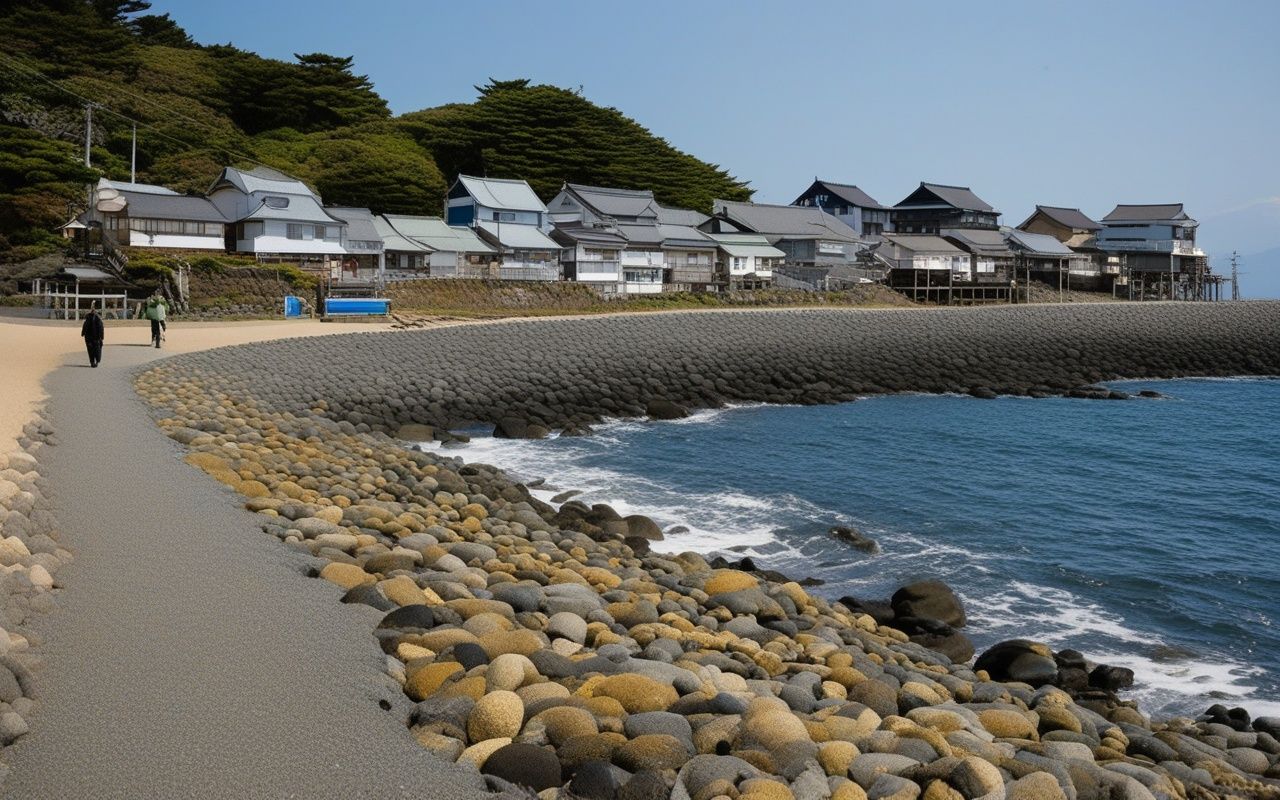
    The path rises and falls gently, never steep enough to be a workout but always high enough to keep the sea in view. It passes through a few sections of pine forest, several viewpoints with benches, and one long stretch along the base of the cliffs where the path hugs the rock and the waves break a few meters below. The surface is well maintained — good shoes help, but sneakers are fine on a dry day.
    Cape Manazuru coastal walking path above the sea

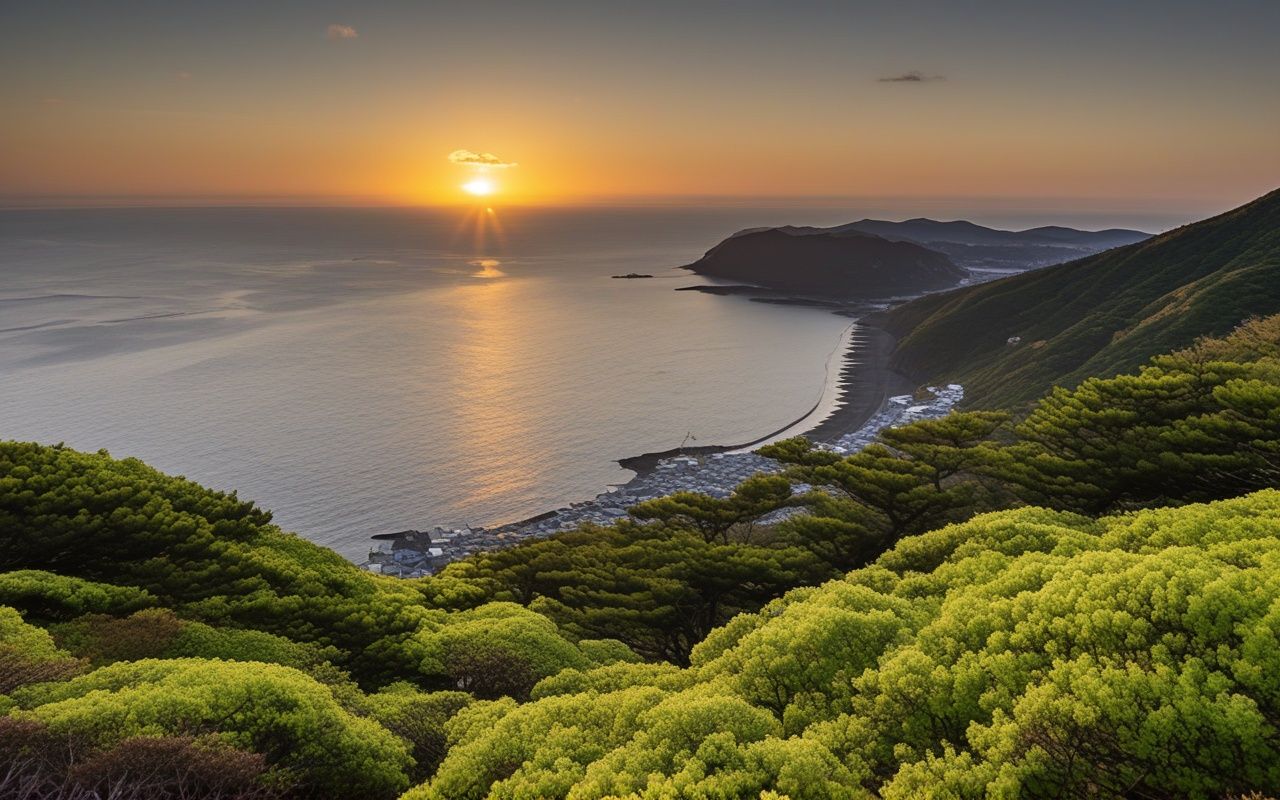
    What surprises most first-time visitors is the quality of the views. Because the peninsula points southwest, the walk opens onto the entire width of Sagami Bay. On clear days you can see the Izu Peninsula across the water, and Mount Fuji sits directly over the sea to the west — a combination that photographers wait years for and that Manazuru delivers on any winter morning.

    Practical Notes for the Walk

    • Time it for morning or late afternoon. The midday sun is harsh on the exposed sections, and the light is flat. Morning light over the sea is the best.
    • Bring water. There is no shop on the path.
    • The path is exposed. Sunscreen and a hat matter in summer; a windbreaker matters in winter, when the sea wind is sharp.
    • The loop has no exit. Once you start the cape section, you are committed to walking to the cape and back. Check the weather before you start.

    ⚓ The Fishing Harbor: A Town That Still Works

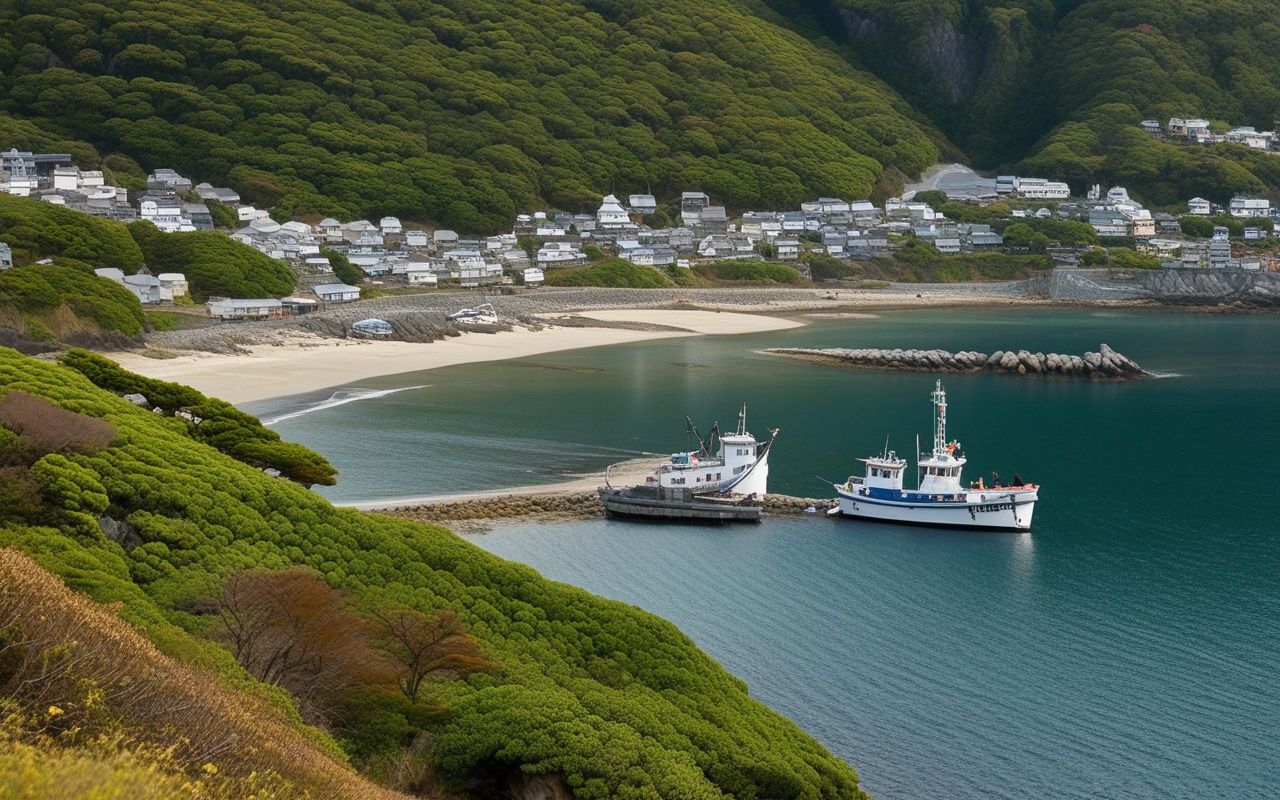
    Manazuru is first and foremost a fishing town, and the harbor is its heart. Unlike the polished marina experiences you find in resort towns, this harbor is a working one — boats unload in the morning, nets dry on the seawall, and the air carries the honest smell of the sea.

    The Morning Market

    In the early morning, the harbor hosts a small fish market where the day’s catch is sold directly. It is not a tourist attraction — the buyers are mostly local restaurants and families — but visitors are welcome to watch, and the atmosphere is worth the early start. The catch is dominated by local white fish, squid, and the kinmedai (golden eye snapper) that is the region’s signature fish.

    Seafood Lunch

    The restaurants around the harbor serve the catch of the day at prices that make Tokyo seafood look absurd. A sashimi set with rice and soup costs ¥1,200-¥2,000, and the quality is exactly what you would expect from a town where the boats dock at the end of the street. The kinmedai is the dish to order — it is served as sashimi, simmered, and grilled, and the local version is as good as any in the region. For a deeper look at the region’s fish culture, my guide to the Misaki tuna port covers the southern half of the same bay.
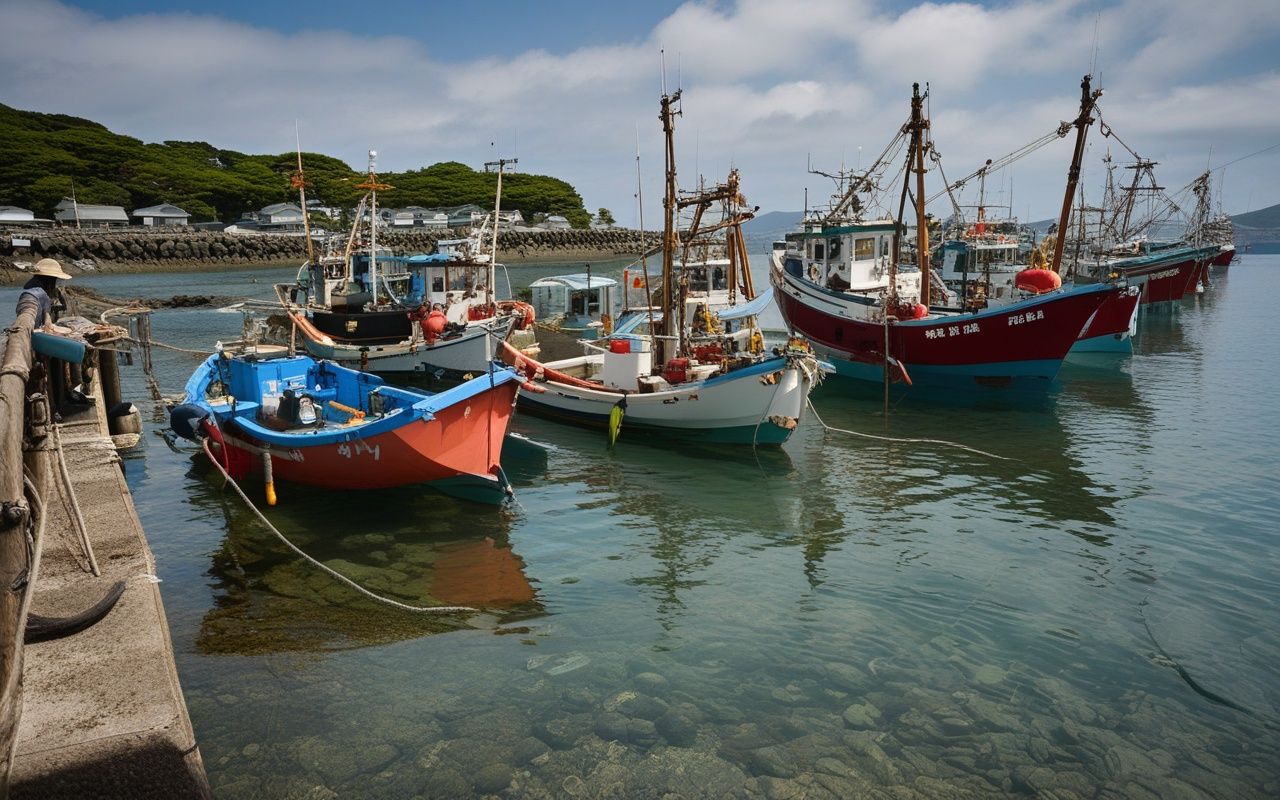
    Manazuru fishing harbor with working boats and nets


    🪨 The Stone Heritage: Where Tokyo’s Granite Came From

    The peninsula’s most unexpected story is its stone. For more than a century, from the late Edo period through the Meiji and Showa eras, Manazuru quarried the granite that built harbors, banks, and government buildings across Tokyo and Yokohama. The quarry faces are still visible in the hillsides, and the stone museum and heritage sites explain the trade that made the peninsula briefly rich.

    The Quarry Heritage

    The most visible remnant is the network of abandoned quarry faces on the inland side of the peninsula. They are not fenced off or glamorized — they are simply there, great gray scars in the green hills that you can see from the road. The heritage center near the station explains the process, the workers’ lives, and the scale of the trade, and it is worth an hour if you are interested in the industrial history of the region.

    Why It Matters

    The stone story gives Manazuru a depth that most small coastal towns lack. It explains the town’s unusual layout — the solid stone walls, the wide streets built for carts, the quiet air of former prosperity. Walking the peninsula with this history in mind changes what you see: the stone walls along the path are not decoration, they are the town’s past, still standing.


    🌅 Fuji Across the Sea: The Sunset View

    Manazuru’s position makes it one of the best places in Kanagawa to see Mount Fuji over the sea. Unlike the inland viewpoints around Hakone, where the mountain competes with hills, Manazuru offers a clear line of sight across the water, with the mountain rising directly above the horizon.

    The Best Viewpoints

    • The cape’s western side — The classic shot: Fuji over the sea, with the Izu Peninsula as a dark silhouette. Best in winter, when the air is clearest.
    • The harbor seawall — A closer, more intimate view, with fishing boats in the foreground.
    • The walk’s upper section — The benches at the high points of the path offer the widest panorama.

    Timing

    Winter and early spring offer the clearest Fuji views — the mountain is visible on a large share of mornings and evenings. Summer brings haze, and the mountain often hides until late evening. Sunset is the magic hour: the mountain turns pink, the sea takes on a long golden reflection, and the walkers on the path stop, as one, to watch. It is the moment that keeps bringing me back.


    🗓️ Sample Itinerary: Manazuru in a Day

    1. 08:30 — Arrive at Manazuru Station. Walk to the harbor (15 minutes) and watch the morning market activity.
    2. 10:00 — Start the Cape Manazuru walk from the harbor. Morning light, coastal views, the sea on your right the whole way.
    3. 12:30 — Reach the cape. Lunch at a harbor restaurant or a picnic at the cape viewpoint.
    4. 14:00 — Visit the stone heritage center for the industrial history.
    5. 15:30 — Walk the upper section of the path or the inland quarry faces for a different perspective.
    6. 16:30 — Seawall sunset with Fuji across the water.
    7. 17:30 — Return train to Tokyo, or extend with an Odawara castle town visit on the way back.

    If you have more time, the peninsula pairs naturally with the Hakone area — the mountain resort is a 30-minute train ride away, and the contrast between the crowded lake town and the empty peninsula makes both more enjoyable.


    📅 Seasonal Notes

    • December-February: The clearest Fuji views of the year. Cold, windy, and empty — the best season for photographers.
    • March-May: Mild weather, spring flowers along the path, and still-excellent visibility.
    • June-July: Rainy season brings humidity and haze, but the green hills are at their richest. The swimming season begins.
    • September-November: Autumn light is beautiful, and the sea is calm. October is a sweet spot for the walk.
    • Summer evenings: The sunset over the sea is dramatic, but the midday sun is punishing on the exposed path.

    💡 Practical Tips

    • Bring cash. The harbor restaurants and the heritage center are cash-only in many cases.
    • Wear walking shoes, even though the path is maintained — the exposed sections can be slippery after rain.
    • Check the weather before the walk. There is no shelter on the cape section.
    • Combine with Odawara or Atami for a two-stop day on the same Tokaido Line ticket.
    • The station has no large luggage lockers. Travel light, or store bags at the hotel-style inns near the harbor.

    Conclusion

    The Manazuru Peninsula is the quiet answer to the region’s busy coastal towns. It has a coastline walk that stands with the best in Kanagawa, a fishing harbor that still works for a living, a stone heritage that explains a century of the region’s history, and some of the finest Fuji-over-sea views in Japan. It is an easy day trip from Tokyo, a natural partner for the Odawara castle town, and the kind of place that rewards visitors who arrive without expectations. Bring good shoes, check the weather, and give the cape walk the two unhurried hours it deserves.


    FAQ

    Q: How long is the Cape Manazuru walk?
    A: The full loop from the harbor to the cape and back takes about two hours at a relaxed pace. It is about 4 kilometers total, with gentle elevation changes.

    Q: Is the walk suitable for beginners?
    A: Yes. The path is well maintained with no steep climbs, and sneakers are fine on a dry day. The main consideration is exposure — bring water, sunscreen, and a hat.

    Q: When is the best time to see Mount Fuji from Manazuru?
    A: Winter and early spring mornings and evenings offer the clearest views. Summer haze often hides the mountain until sunset.

    Q: Can I do Manazuru as a day trip from Tokyo?
    A: Yes. The train takes about 80-100 minutes from Tokyo Station, and the peninsula’s main sights are walkable from the station. Arrive early to catch the morning light on the walk.
  • Yugawara Onsen — Quiet Seaside Hot Spring Town on Sagami Bay

    Yugawara Onsen — Quiet Seaside Hot Spring Town on Sagami Bay

    Overview

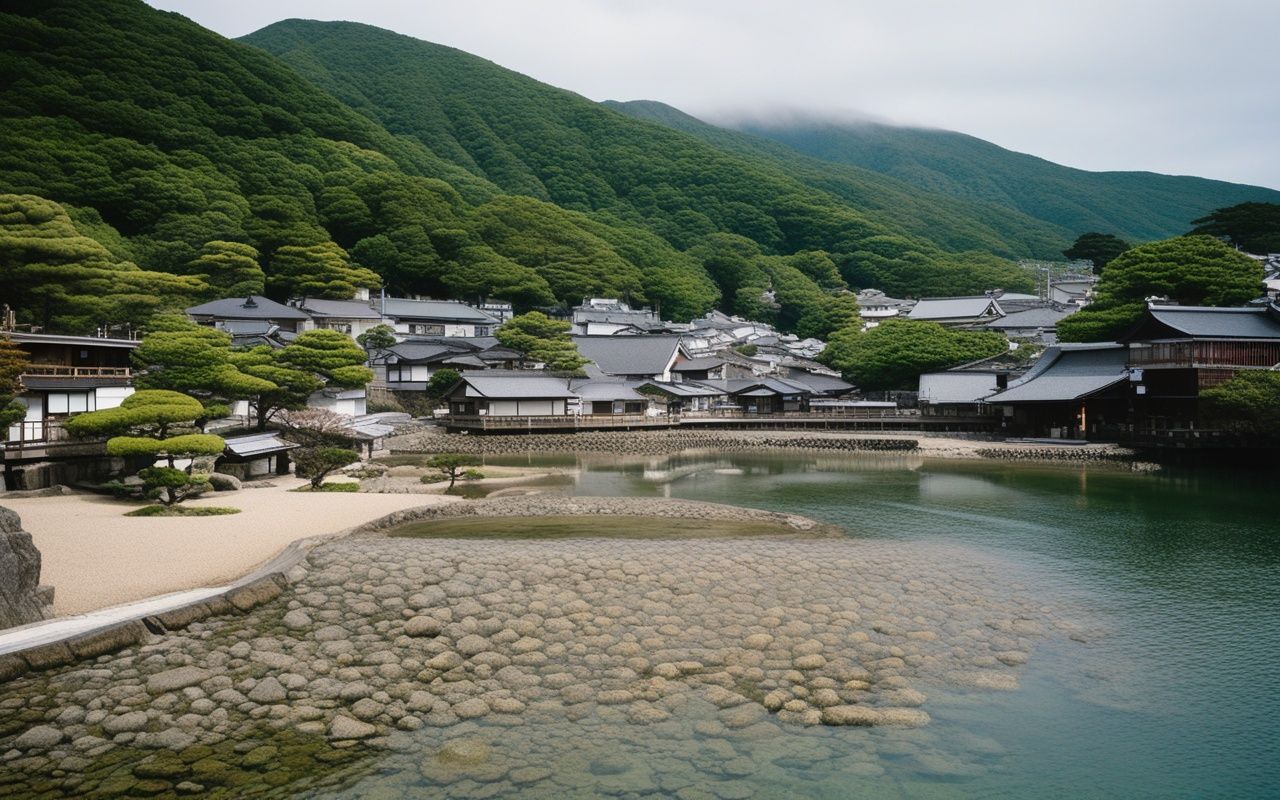
    Yugawara is the hot spring town that most travelers to the Kanto region never quite reach. It sits on the western edge of Sagami Bay, about 90 minutes from Tokyo, and it has been soaking visitors in mineral-rich water since the eighth century. On my first trip, I made the mistake of treating it as a smaller version of Hakone. It is not. Hakone is a mountain resort built around a crater lake; Yugawara is a seaside town where hot springs bubble up within walking distance of the beach, and where the same onsen water that fills your ryokan bath also fills the public foot baths along the river.

    What pulled me back a second and third time was the pacing. Yugawara does not demand an itinerary. You can spend a full day doing almost nothing — soaking in the morning, walking to the cape for lunch, sitting on the seawall at sunset — and leave feeling more rested than after most weekends away. The town is compact, the ryokan are traditional rather than polished, and the seafood is caught in the bay you can see from the bath.

    This guide covers the best ways to experience Yugawara: how to get there, which baths are worth the money, where the plum blossoms and views hide, and how to build a day or an overnight trip that makes the most of a town that rewards slow travel.


    📍 Getting There

    Yugawara has one railway station, Yugawara Station on the JR Tokaido Line, and it is the last stop before Atami. Access from Tokyo is straightforward and feels much shorter than the distance suggests.

    From Tokyo

    1. JR Tokaido Line from Tokyo Station (about 90 minutes, ¥1,900) — Take a rapid service bound for Atami or Odawara and change if needed. Several direct trains stop at Yugawara; otherwise, changing at Odawara adds only a few minutes. This is the option I use most because it requires no thinking.
    2. JR Tokaido Shinkansen to Atami (about 45 minutes) — Get off at Atami and take the local JR line two stops back west to Yugawara. This is faster but costs roughly three times as much. Worth it only if you are already riding the shinkansen from the west.
    3. Odakyu Line via Odawara — If you are combining Yugawara with a day in the Odawara castle town, the Odakyu Limited Express from Shinjuku to Odawara, then a short JR hop to Yugawara, works well.

    Getting Around Town

    The station sits at the foot of the hills, and most ryokan and public baths are within a 10- to 20-minute walk or a short bus ride. The town runs a free shuttle for overnight guests of many ryokan — check with your accommodation when you book. For the cape and Makuyama Park, buses leave from the station every 20 to 40 minutes, and the fares are small (¥200-¥300).

    A note from experience: the walk from the station to the river area is slightly uphill, and the return leg at the end of a long soak day can feel longer than it is. If your ryokan is on the river side, take the shuttle on the way in and walk down on the way out.


    ♨️ The Baths: Ryokan vs. Public Onsen

    The heart of Yugawara is its water. The springs here are alkaline and mild on the skin, which makes them a favorite for families and first-timers who find stronger acidic springs uncomfortable. The town claims more than 700 springs, and the tradition runs deep enough that even the station has a foot bath.

    Staying at a Ryokan with an Onsen

    Most first-time visitors book a ryokan with a private or shared bath. The advantages are obvious: you control the timing, you are never far from a soak, and the evening meal (kaiseki) arrives at your table rather than a dining hall. Prices range from about ¥15,000 per person for a modest ryokan with dinner and breakfast to ¥40,000 or more for a sea-view room with a private open-air bath.

    Things I learned the hard way:

    • Check the bath hours. Many ryokan switch the men’s and women’s baths at dusk, and some close the outdoor bath on windy nights. If the open-air bath matters to you, confirm the schedule when you arrive.
    • Sea-view rooms are worth the premium only on the upper floors. A “bay view” on the first floor often looks out at a seawall. Ask for a high floor.
    • The onsen etiquette is the same as elsewhere in Japan — wash before entering, keep your towel out of the water, and no swimsuits. For a full rundown of the rules, see my guide to onsen culture and etiquette.

    Public Baths: The Budget Route

    If you want the experience without the ryokan price tag, Yugawara has several public baths and day-use facilities. The best known is the riverside foot bath, which is free and always busy on weekends. For a full soak, the day-use baths at the larger ryokan and the public bathhouses cost ¥500-¥1,500 and typically include shampoo and soap.

    One of my favorite habits: end the day at the public bath closest to your ryokan, then walk back through the quiet evening streets with a bottle of local milk. It is a small ritual, but it is the thing I remember most clearly from my trips here.


    🌸 Makuyama Park and the Mountain Side

    Yugawara is not only a town of water — it also has a mountain behind it. Makuyama Park sits on the hillside above the town, and it is famous for two things: one of the best views in the area, and a plum grove that draws crowds every February.

    The View and the Walk

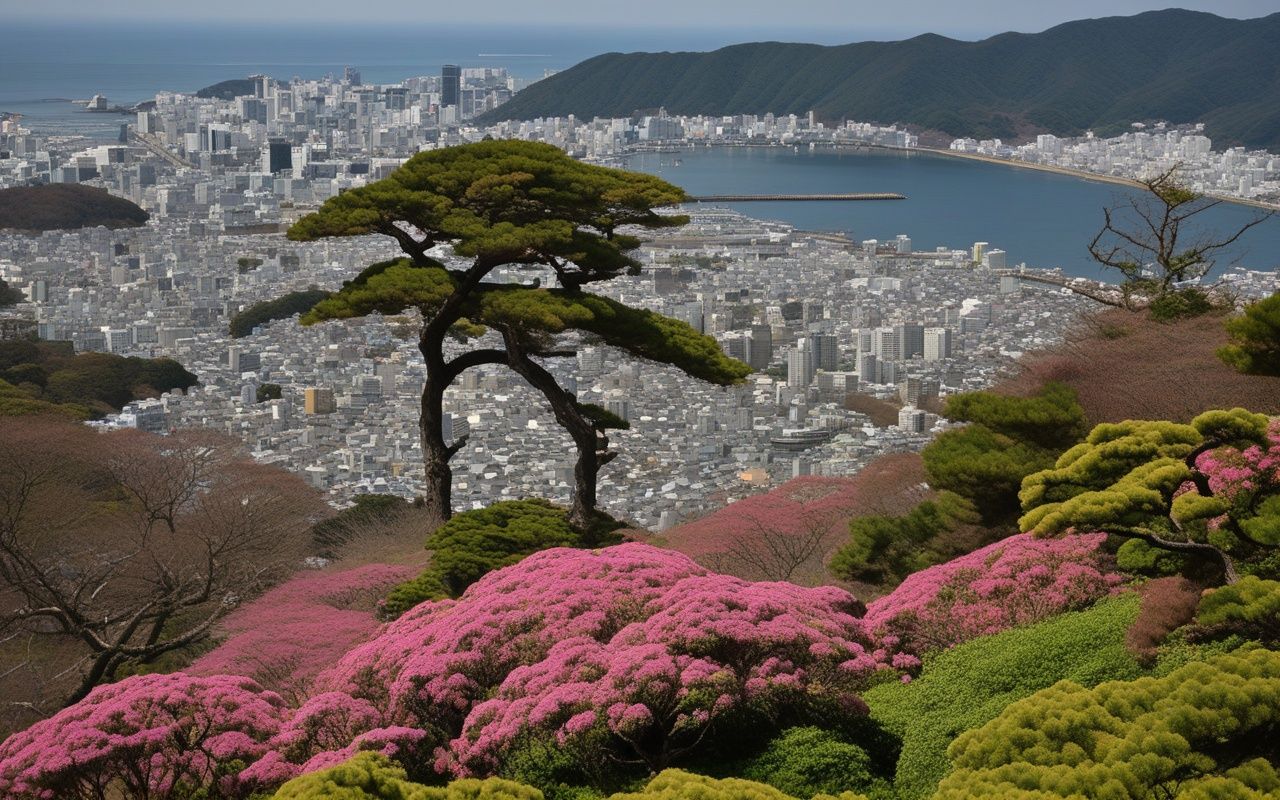
    The park is reached by a short bus ride from the station followed by a 20-minute uphill walk through the trees. The reward is a broad view over the town, the bay, and the Izu Peninsula beyond. On clear winter days, Mount Fuji is visible to the west, and the sunset from the lookout is genuinely lovely — the water catches the light in a way that the busier Shonan beaches cannot match.

    Makuyama Park hillside view over Yugawara and Sagami Bay

    I recommend the park as a morning activity. The light is better, the park is quieter, and you can be back in the town by lunchtime with the whole afternoon free for the baths.

    Plum Season and Foliage

    The plum grove at Makuyama is the town’s seasonal star. From mid-February to early March, the hillside turns white and pink, and the park fills with families and vendors selling plum sweets. The festival atmosphere is cheerful but crowded, so arrive early.

    In late November, the same park offers maples and ginkgo trees in red and gold. The foliage is not as dramatic as Hakone’s, but the crowd is a fraction of the size, which makes it the better choice if you want colors without the queues.


    🌅 The Sea: The Cape, the Seawall, and the Sunset

    The defining feature of Yugawara, compared with mountain resorts, is that the sea is always close. The cape west of town is the best place to see it properly.

    The Cape Walk

    A walking path runs along the headland at the western edge of town, with stone steps down to hidden coves used by local swimmers and fishing families. The path takes about an hour out and back at a relaxed pace, and the views west toward the Izu Peninsula and east along the bay are constant. On clear evenings, Mount Fuji appears across the water — a sight that surprises most people because they expect Fuji views inland, not from a seaside path.

    Yugawara cape coastal path at sunset with Fuji across the bay

    The Seawall Sunset

    If you only have one evening, skip the tourist spots and buy a drink from the convenience store, then sit on the seawall near the harbor as the sun drops behind the Izu hills. The locals do exactly this, and it is the most authentic Yugawara experience I have found. The combination of warm water, cold drink, and the last light on the bay is hard to beat.


    🍤 Eating in Yugawara

    Because Yugawara sits on the bay, the food is seafood-first. The local specialty is kinmedai (golden eye snapper), a deep-red fish that is served as sashimi, simmered, and grilled across the town’s restaurants. The fish is caught locally, and the freshness shows.

    What to Order

    • Kinmedai sashimi — The flagship dish. Order it at lunch for the best price.
    • Hama-no-miyako set meals — Several restaurants near the harbor serve lunch sets with a mix of local seafood, rice, and pickles for ¥1,200-¥2,000.
    • Kamaboko and fish cakes — The region around Odawara is famous for fish paste, and Yugawara shops sell fresh versions. For the deeper story of the craft, see my guide to Odawara’s kamaboko history.

    Where to Eat

    The harbor area has the densest cluster of restaurants, and the station front has a handful of reliable options. Reservations matter for dinner at the better places, especially on weekends. For a cheap and cheerful lunch, the set-menu restaurants near the harbor are the safest bet — they serve the same fish as the fancy places, for a fraction of the price.


    🗓️ Sample Itinerary: The Best of Yugawara in a Day

    1. 09:00 — Arrive at Yugawara Station. If your ryokan offers a shuttle, drop your bag and pick up a local map.
    2. 09:30 — Walk or bus to Makuyama Park. Morning light, the view over the bay, and (if you are here in February) the plum grove.
    3. 12:00 — Lunch at a harbor seafood restaurant. Kinmedai set meal.
    4. 13:30 — The cape walk. Slow pace, coastal views, Mount Fuji on clear days.
    5. 15:30 — Return to town for a soak at a public bath or your ryokan’s onsen.
    6. 18:00 — Seawall sunset with a drink.
    7. 19:00 — Dinner in the harbor area, or kaiseki at your ryokan if you are staying overnight.

    If you have a second day, the town pairs well with the Odawara castle town one stop away, or with the Hakone area for a mountain-versus-sea contrast on the same rail pass.


    📅 Seasonal Notes

    • February-March: Plum blossom season at Makuyama Park. Crowded but beautiful.
    • April-May: Mild weather, clear skies, and the best chance of Fuji views across the bay.
    • June-July: Rainy season is damp but quiet; the onsen feels especially good in the rain. Summer swimming season begins at the small town beach.
    • September-November: Autumn foliage at Makuyama, and excellent clear-air visibility for sunset views.
    • December-January: The quietest season. Winter sunsets over the bay are stunning, and onsen prices drop outside the New Year holiday.

    💡 Practical Tips

    • Carry small change for buses and public baths — the ¥100 and ¥500 coins add up.
    • Bring a small towel for public baths; many provide them for a fee, but it is cheaper to bring your own.
    • Weekday visits are dramatically quieter than weekends, and ryokan prices drop sharply midweek.
    • Combine with Odawara or Atami for a two-stop trip on the same Tokaido Line ticket.
    • Check the ryokan’s shuttle schedule when you book — the walk from the station is fine, but the shuttle is free and easy.

    Conclusion

    Yugawara is the hot spring town that rewards travelers who want a slower pace than Hakone and a quieter atmosphere than Atami. The water is gentle, the sea is always in view, and the local rhythm — soak, eat, walk, sunset — is exactly what most of us are actually looking for on a weekend away. It is an easy day trip from Tokyo, a natural add-on to the Odawara castle town, and one of the few places in the region where the train station, the onsen, and the sea are all within a short walk of each other. Go on a weekday, keep the itinerary light, and let the town set the pace.


    FAQ

    Q: Is Yugawara suitable for a day trip from Tokyo?
    A: Yes. The train takes about 90 minutes from Tokyo Station, and the town is compact enough to enjoy in a full day. For the full onsen-and-meal experience, an overnight stay is better, but a day trip works well.

    Q: How does Yugawara compare with Hakone?
    A: Hakone is a larger mountain resort with lake views, museums, and a much bigger tourist infrastructure. Yugawara is a small seaside town with a relaxed pace, cheaper prices, and the sea instead of the lake. Both have excellent onsen; they suit different moods.

    Q: Do I need to book a ryokan in advance?
    A: Yes, especially on weekends and in February during plum season. Weekday bookings are easier, but booking a week or two ahead is safest.

    Q: Can I visit the onsen without staying overnight?
    A: Yes. Day-use baths and public bathhouses are available, and the riverside foot bath is free. Many ryokan also offer day-use bathing during daytime hours.