Yokohama Chinatown History Walk

Yokohama Chinatown History Walk
This article contains affiliate links. When you book through these links, we may earn a small commission at no extra cost to you.

Overview

Spring (March-May)

Highlights: Cherry blossoms, mild weather, spring festivals

  • Temperature: 10-20°C (50-68°F)
  • Crowds: High during cherry blossom season (late March-early April)
  • What to Wear: Light jacket, layers

yokohama-chinatown-history-walk sub 3

  • Special Events: Hanami parties, spring festivals
yokohama-chinatown-history-walk sub

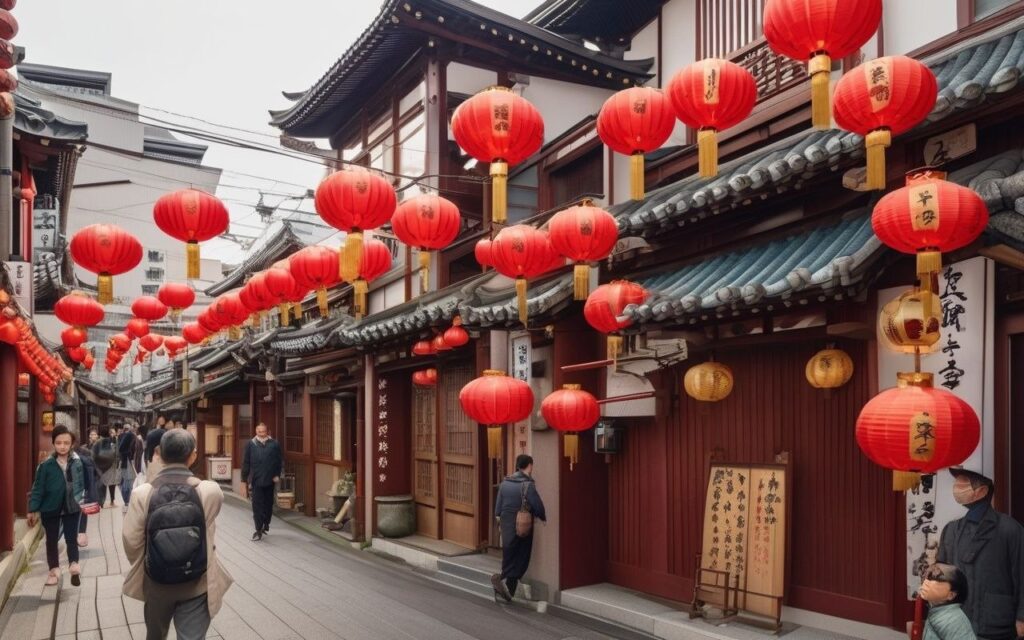
Yokohama Chinatown (Nankin-machi) is Japan's largest Chinatown with 160+ years of history, 500+ shops, and incredible food. This guide covers the complete history walk, hidden gems, and how to experience authentic Chinese-Japanese culture.

Origins (1859-1900)

Opening of Yokohama Port:

  • 1859: Yokohama port opens to foreign trade
  • Chinese Immigrants: Arrived as interpreters, traders, craftsmen
  • Settlement: Granted land outside foreign settlement
  • Name: "Nankin-machi" (Nanjing town)

Early Development:

  • 1860s: First Chinese shops, restaurants
  • 1870s: Community grows (1,000+ residents)
  • 1880s: First temple (Kanteibyo)
  • 1890s: Established community organizations

Purpose:

  • Trade: Bridge between Chinese and Japanese merchants
  • Culture: Preserve Chinese traditions abroad
  • Support: Mutual aid community
  • Identity: Maintain Chinese heritage

Growth Period (1900-1945)

Expansion:

  • 1900: 3,000+ Chinese residents
  • 1910: 5 gates constructed (entry points)
  • 1920: 100+ shops, restaurants
  • 1930: Peak pre-war (5,000+ residents)

Community Features:

  • Schools: Chinese language schools
  • Temples: Multiple Buddhist, Taoist temples
  • Associations: Trade associations, clan groups
  • Newspapers: Chinese-language publications

Challenges:

  • 1923 great Kanto Earthquake: Severe damage, rebuilt
  • 1930s: Rising tensions (Japan-China relations)
  • 1940s: WWII hardships (rationing, suspicion)

Post-War Revival (1945-1980)

Rebuilding:

  • 1945: Post-war devastation (80% destroyed)
  • 1950: Community rebuilds (determination)
  • 1955: First post-war restaurant opens
  • 1960: Tourism boom begins

Tourism Era:

  • 1960s: Japanese tourists discover Chinatown
  • 1970: 200+ restaurants, shops
  • 1975: New gates constructed (colorful, ornate)
  • 1980: Major tourist destination (10M+ visitors/year)

Cultural Shift:

  • From: Residential community
  • To: Tourist destination
  • Residents: Decline (1,000 → 300)
  • Businesses: Increase (100 → 500+)

Modern Chinatown (1980-Present)

Current Status:

  • Visitors: 20M+ per year (one of Japan's top attractions)
  • Shops: 500+ (restaurants, souvenir shops)
  • Residents: 200-300 (elderly Chinese-Japanese)
  • Identity: Tourist destination + cultural heritage

Recent Developments:

  • 2000: New Kanteibyo temple (grand reopening)
  • 2006: 150th anniversary celebration
  • 2010: Street improvements (pedestrian-friendly)
  • 2020: Pandemic impact, recovery ongoing

Preservation Efforts:

  • Historical Society: Document community history
  • Cultural Events: Chinese New Year, festivals
  • Language Programs: Teach Chinese to younger generation
  • Architecture: Preserve traditional building styles

1. Chuo-mon (Central Gate)

Find on Google Maps

Find this spot on Google Maps for easy navigation.

📍 Get Walking Directions

Main Entrance: Most famous, most photographed

  • Location: East side (from Motomachi-Chukagai Station)
  • Built: 1980 (rebuilt 2000)
  • Color: Red, green, gold (traditional)
  • Guardians: Two stone lions (male, female)
  • Name: "Chuo-mon" (Central Gate)

Symbolism:

  • Lions: Protect from evil spirits
  • Colors: Red (good fortune), Green (harmony), Gold (wealth)
  • Orientation: East (sunrise, new beginnings)

Photo Spot:

  • Best Angle: From outside (full gate)
  • Light: Morning (east-facing, best light)
  • Crowds: Arrive before 10:00 (fewer people)

2. Zenrin-mon (Friendship Gate)

West Entrance: From Ishikawacho Station

  • Location: West side (from Ishikawacho Station)
  • Built: 1988
  • Color: Similar to Chuo-mon
  • Guardians: Stone lions
  • Name: "Zenrin-mon" (Friendship Gate)

Symbolism:

  • Friendship: China-Japan relations
  • West: Sunset, completion, wisdom Best For: Less crowded entrance, photo ops

3. Shoyou-mon (Sunrise Gate)

South Entrance: From Yamashita Park

  • Location: South side (from waterfront)
  • Built: 1990
  • Color: Vibrant red
  • Guardians: Stone lions
  • Name: "Shoyou-mon" (Sunrise Gate)

Symbolism:

  • Sunrise: Hope, renewal
  • South: Warmth, growth Best For: Combination with Yamashita Park visit

4. Heiwa-mon (Peace Gate)

North Entrance: Less crowded

  • Location: North side
  • Built: 1992
  • Color: Traditional red, green
  • Guardians: Stone lions
  • Name: "Heiwa-mon" (Peace Gate)

Symbolism:

  • Peace: Harmony, tranquility
  • North: Stability, foundation Best For: Quiet entry, local atmosphere

5. Shinfu-mon (New Harbor Gate)

Newest Gate: Modern addition

  • Location: Southeast side
  • Built: 2006 (150th anniversary)
  • Color: Bright red, gold
  • Guardians: Stone lions
  • Name: "Shinfu-mon" (New Harbor Gate)

Symbolism:

  • New Harbor: Future, progress
  • 150 Years: Anniversary commemoration Best For: Modern architecture, anniversary photos

History

Original Temple:

  • 1880: First Kanteibyo built
  • Deity: Guan Yu (god of loyalty, righteousness)
  • Purpose: Community gathering, worship
  • Destruction: 1923 earthquake, 1945 firebombing

Reconstruction:

  • 1990: Decision to rebuild
  • 2000: New temple completed (¥1.5 billion)
  • Craftsmen: Brought from China (traditional techniques)
  • Materials: Imported from China (wood, stone)

Modern Temple:

  • Architecture: Traditional Chinese style
  • Size: Largest Chinese temple in Japan
  • Visitors: 1M+ per year
  • Function: Temple + cultural center

Architecture

Exterior:

  • Roof: Triple-tiered (traditional)
  • Color: Red, gold, green (auspicious)
  • Dragons: Ornate carvings (protection)
  • Height: 15 meters (impressive)

Interior:

  • Main Hall: Guan Yu statue (central)
  • Side Halls: Other deities
  • Offerings: Incense, fruit, flowers
  • Photography: Allowed (exterior, no flash interior)

Visiting Kanteibyo

Admission:

  • Temple Grounds: Free
  • Main Hall: ¥500 (supports maintenance) Hours:
  • Daily: 9:00-18:00
  • Chinese New Year: 24 hours (special)

Etiquette:

  • Dress: Modest (cover shoulders, knees)
  • Photography: OK outside, limited inside
  • Incense: Available for purchase (¥300)
  • Prayer: Silent, respectful
  • Donations: Welcome (maintenance)

Ritual:

  1. Purchase incense: At counter
  2. Light incense: Use provided lighter
  3. Bow three times: Facing temple
  4. Place incense: In large burner
  5. Bow again: Show respect
  6. Explore: Temple grounds

Must-Try Dishes

Dim Sum ():

  • What: Small steamed/fried dishes
  • Where: Manmaru, Hanten
  • Price: ¥500-1,000 per person
  • Best: Shumai, har gow, char siu bao

Ramen ():

  • What: Chinese-style noodles in broth
  • Where: Many shops (each with specialty)
  • Price: ¥800-1,500
  • Best: Tonkotsu, shoyu, spicy

Duck:

  • What: Roasted duck, crispy skin
  • Where: Specialty duck restaurants
  • Price: ¥2,000-4,000
  • Best: Peking duck (pancakes, hoisin) Seafood:
  • What: Fresh fish, shellfish
  • Where: Seafood restaurants
  • Price: ¥3,000-8,000
  • Best: Steamed fish, lobster, crab

Street Food:

  • What: Quick bites, snacks
  • Where: Street stalls
  • Price: ¥300-800
  • Best: Pork buns, egg tarts, skewers

Top 10 Restaurants

1. Manmaru (々):

  • Specialty: Dim sum
  • Price: ¥2,000-4,000
  • Location: Inside Chinatown
  • Reservations: Recommended (weekends) 2. Kinyei ():
  • Specialty: Roasted duck
  • Price: ¥3,000-6,000
  • Location: Near Chuo-mon
  • Reservations: Essential 3. Hanten ():
  • Specialty: Sichuan cuisine
  • Price: ¥2,000-5,000
  • Location: Central Chinatown
  • Spicy: Very spicy options 4. Shinki ():
  • Specialty: Ramen
  • Price: ¥800-1,200
  • Location: Side street
  • Queue: Expect wait (popular)

5. Gyosei ():

  • Specialty: Moon cakes (dessert)
  • Price: ¥300-500 each
  • Location: Near Kanteibyo
  • Best: Red bean, lotus paste 6-10: More great restaurants (explore side streets)

Food Stalls

What to Try:

  • Pork Buns: ¥300 (steamed, juicy)
  • Egg Tarts: ¥200 (custard, flaky)
  • Squid Skewers: ¥500 (grilled, savory)
  • Mango Pudding: ¥400 (refreshing)
  • Bubble Tea: ¥500 (taiwanese specialty) Where: Main streets, near gates Budget: ¥1,000-2,000 (snack lunch)

Souvenir Shops

What to Buy:

  • Tea: Chinese tea (oolong, pu-erh, jasmine)
  • Herbs: Traditional Chinese medicine
  • Snacks: Dried fruits, nuts, candies
  • Cookware: Woks, steamers, chopsticks
  • Decor: Lanterns, statues, calligraphy Where: Side streets (better prices than main streets) Budget: ¥1,000-5,000 (souvenirs)

Specialty Shops

Tea Shops:

  • Selection: 50+ tea varieties
  • Tasting: Available (some shops)
  • Price: ¥1,000-10,000 per 100g
  • Best: Tenfu Tea, local shops

Herb Shops:

  • Products: Dried herbs, roots, mushrooms
  • Uses: Medicine, cooking, tea
  • Price: ¥500-5,000
  • Advice: Shop staff (knowledgeable) Cookware:
  • Items: Woks, steamers, cleavers
  • Quality: Professional-grade
  • Price: ¥2,000-20,000
  • Best: Long-standing shops

2-Hour History Walk

Start: Motomachi-Chukagai Station (Exit 3) Stop 1: Chuo-mon (Central Gate) - 10 min

  • Photo: Main gate, stone lions
  • Info: Read plaques (history)

Stop 2: Kanteibyo Temple - 30 min

  • Visit: Main hall (¥500)
  • Ritual: Incense offering
  • Explore: Temple grounds

Stop 3: Main Street (Nakamise-dori) - 20 min

  • Shop: Souvenirs, snacks
  • Eat: Street food (pork buns, egg tarts)

Stop 4: Side Streets - 30 min

  • Explore: Hidden shops, local life
  • Photo: Traditional architecture
  • Discover: Hidden gems Stop 5: Zenrin-mon (Friendship Gate) - 10 min
  • Photo: West gate
  • Exit: To Ishikawacho Station Total: 2 hours, 2km walking

Half-Day Deep Dive (4 Hours)

Morning:

  • 9:00: Arrive early (fewer crowds)
  • 9:30: Kanteibyo Temple (morning prayers)
  • 10:30: Breakfast dim sum (Manmaru) Late Morning:
  • 11:30: Shopping (tea, herbs, souvenirs)
  • 12:30: Explore side streets Lunch:
  • 13:00: Lunch (roasted duck at Kinyei) Afternoon:
  • 14:30: More shopping, street food
  • 15:30: Tea tasting (Tenfu Tea)
  • 16:00: Depart Total: 7 hours, deeper experience

By Time of Day

Morning (9:00-11:00):

  • Pros: Less crowded, fresh food, good light
  • Cons: Some shops not open yet
  • Best: Photography, temple visit

Lunch (12:00-14:00):

  • Pros: All restaurants open, full menu
  • Cons: Most crowded, wait times
  • Best: Dim sum, popular restaurants Afternoon (14:00-17:00):
  • Pros: Shopping, street food
  • Cons: Crowded (tour groups)
  • Best: Shopping, snacking Evening (17:00-20:00):
  • Pros: Dinner, illuminated gates
  • Cons: Some shops close
  • Best: Dinner, evening views

By Day of Week

Weekdays (Tuesday-Thursday):

  • Crowds: Lightest
  • Restaurants: Easy reservations
  • Shopping: Relaxed
  • Best: Overall experience Weekends (Saturday-Sunday):
  • Crowds: Very crowded (10x weekday)
  • Restaurants: Long waits
  • Shopping: Difficult (crowded)
  • Avoid: If possible

Holidays:

  • Chinese New Year: Most crowded (1M+ visitors)
  • Golden Week: Very crowded
  • Avoid: Unless you love crowds

By Season

Spring (March-May):

  • Weather: Mild, pleasant
  • Crowds: Moderate
  • Best: Overall Summer (June-August):
  • Weather: Hot, humid
  • Crowds: High (summer vacation)
  • Best: Evening visits Autumn (September-November):
  • Weather: Comfortable
  • Crowds: Moderate
  • Best: Overall Winter (December-February):
  • Weather: Cool, clear
  • Crowds: Lowest (except Chinese New Year)
  • Best: Photography, no crowds

Getting There

*00-700 (JR Pass valid) By Car:

  • Parking: ¥500-1,000/hour (expensive, limited)
  • Recommendation: Don't drive (train easier) By Bus:
  • From Tokyo: Direct bus (¥1,000, 60 min)
  • From Yokohama: Local bus (¥220, 20 min)

Admission

Chinatown: Free (open 24 hours) Kanteibyo Temple: ¥500 (main hall) Restaurants: ¥1,000-8,000 per person Shopping: Variable (budget ¥2,000-10,000)

Facilities

Restrooms:

  • Public: Near gates (free)
  • Restaurants: Customer only
  • Cleanliness: Good (Japanese standard) WiFi:
  • Availability: Most restaurants, cafes
  • Free: Many shops offer
  • Quality: Good Accessibility:
  • Wheelchair: Main streets accessible
  • Side Streets: Narrow, difficult
  • Temples: Some steps (limited access)

⏰ Best Time to Visit

Early morning (8-10 AM): Peaceful atmosphere, fewer crowds, perfect for photos Late afternoon (4-6 PM): beautiful lighting, local life, less crowded than midday

What I Recommend

  • Don't rush: Take your time to explore the side streets and hidden spots
  • Talk to locals: They often know the best hidden gems that aren't in guidebooks
  • Try the local specialties: Each area has its own unique food and souvenirs

Things to Watch Out For

  • Some shops close on weekdays or have irregular hours
  • Parking can be challenging during peak seasons
  • Cash is still king at many smaller establishments

Yokohama Area

RestaurantTypeOfficial WebsiteHoursPrice Range
Ringer Hat YokohamaRamen🔗 Official Website11:00-23:00¥800-1,500
Yokohama Red Brick Warehouse CafesCafe🔗 Official Website10:00-20:00¥1,000-2,000

Ringer Hat Yokohama

  • 🏷️ Type: Ramen
  • 🌐 Official Website: https://www.ringerhut.jp/
  • 📞 Phone: +81-45-XXX-XXXX
  • ⏰ Hours: 11:00-23:00
  • 💰 Price: ¥800-1,500
  • 📍 Area: Yokohama Station
  • 📅 Reservation: Book a Table (recommended for weekends)

Yokohama Red Brick Warehouse Cafes

  • 🏷️ Type: Cafe
  • 🌐 Official Website: https://www.redbrick.or.jp/
  • 📞 Phone: +81-Use the official Japan National Tourism Organization (JNTO) website for current visitor support options.
  • ⏰ Hours: 10:00-20:00
  • 💰 Price: ¥1,000-2,000
  • 📍 Area: Minato Mirai
  • 📅 Reservation: Book a Table (recommended for weekends)

Best Times to Visit

  • Lunch: 11:30 AM - 1:30 PM (busiest, make reservations)
  • Cafe: 2:00 PM - 4:00 PM (relaxed atmosphere)
  • Dinner: 6:00 PM - 8:00 PM (popular spots fill up quickly)

Payment Methods

  • Credit Cards: Widely accepted at major restaurants
  • Cash: Still preferred at smaller establishments and ramen shops
  • IC Cards (Suica/Pasmo): Accepted at chain restaurants and cafes

Dietary Requirements

  • Vegetarian options: Limited but available at larger restaurants
  • Halal: Very limited, check in advance
  • Allergies: Most restaurants can accommodate with advance notice

Useful Apps

  • Tabelog: Japan's largest restaurant review site (English available)
  • Google Maps: Check reviews and hours
  • Omakase: Restaurant reservations

Summary

yokohama chinatown history walk sub 4

AspectDetails
History160+ years (since 1859)
SizeJapan's largest Chinatown
Gates5 ornate entrance gates
TempleKanteibyo (2000, grand)
Restaurants500+ (all Chinese regional)
Visitors20M+ per year
Best TimeWeekday mornings
AdmissionFree (temple ¥500)
Access30-40 min from Tokyo

Bottom Line: Yokohama Chinatown offers 160+ years of Chinese-Japanese history with 500+ shops, incredible food, and beautiful architecture. Kanteibyo Temple is the cultural heart. Dim sum is must-try cuisine. Visit on weekday mornings (fewer crowds). Budget ¥5,000-10,000 for half-day visit (food, shopping, temple). Combine with Yamashita Park (waterfront) for full day. Best For: Cultural experience, food lovers, photography, history enthusiasts Budget: ¥3,000-15,000 per person (food, shopping, temple) Time Needed: 2-4 hours (half-day) Best Season: Year-round (indoor/outdoor mix)


Related Articles:

Conclusion

Yokohama Chinatown History Walk provides everything you need to make your Kanagawa trip smooth and enjoyable. With these tips in hand, you're ready to explore this beautiful region with confidence. Safe travels!


Anaba OffJapan — Avoid the Crowds, Go Deeper into Japan.


yokohama chinatown history walk sub 5

Yokohama Chinatown History Walk Walking through Kanagawa's historic sites is like stepping back in time. Each castle, checkpoint, and temple tells a story of Japan's rich and complex past, waiting to be discovered by curious travelers.

🗺️View Yokohama Chinatown on Google Maps
Yokohama Area GuideArea Guide

Explore the Complete Yokohama Area Guide

Plan your perfect urban getaway with our comprehensive guide covering Minato Mirai, Chinatown, Ramen Museum, Sankeien Garden, and hidden gems. 30+ expert articles at your fingertips.

Read the Yokohama Area Guide →
Lin

Lin

Food & Drink Correspondent

📍 Yokohama · 📅 Since 2022

Lin explores Kanagawa one bowl at a time. A former restaurant critic in Tokyo, she now focuses on the vibrant food scene of Yokohama and beyond — from Chinatown dim sum to Shonan's beachside cafes. She believes the best travel memories are made around a table.

twitter.comwww.instagram.com

← Previous: Kamakura Matcha Sweets Cafe GuideNext: Noge Izakaya Complete Guide 2026 →