
Hayama to Misaki Walking Route Guide 2026
Overview
Access
Most visitors reach Hayama from central Tokyo by JR, private railway, or highway bus, and an IC card (Suica or Pasmo) works across all of them. From my experience, leaving Tokyo before the morning rush keeps the journey relaxed, and station luggage lockers are handy if you arrive early.
Introduction: Walking Across the Peninsula
The Miura Peninsula is only about 8 kilometres wide at its narrowest, but it holds more variety than its size suggests. The north, around Hayama, is hilly and forested — the so-called Miura Alps, where trails wind through cedar groves and emerge at viewpoints overlooking Sagami Bay. The center is agricultural: flat fields of daikon radish and cabbage, dotted with farmhouses and small shrines. The south, around Misaki, returns to the coast, with fishing harbours and views across the water to Jogashima Island.
There is no official trail that connects these zones. The route described here was built by linking existing hiking courses with quiet roads and public bus routes. It is not a wilderness trek — you will walk through residential areas and cross roads — but it offers a genuine sense of crossing the peninsula on foot, which few visitors attempt.
What to Expect:
- Start: Hayama (Isshiki Beach or Zushi Station area)
- Terrain: Forest trail (20%), country roads (50%), coastal path (15%), bus (15%)
- Navigation: Google Maps works for the road sections; the trail section is marked in Japanese
- Water: Available at convenience stores along the route (carry 1L minimum)
- Lunch: Misaki Port’s tuna restaurants are the finish-line reward
Our guide to Hayama Hidden Beaches has additional tips and recommendations.
Updated: June 2026 (route verified)
Route Overview
Segment 1: Hayama to Sengenyama Summit
Hayama → Sengenyama hiking course → Summit viewpoint
| Detail | Info |
|---|---|
| Distance | 4 km |
| Time | 1.5–2 hours |
| Elevation gain | ~200 m |
| Difficulty | Moderate (steady climb) |
| Trail type | Forest path, some steep sections |
Route:
Start from the Hayama area — either from the Hayama hidden beaches near Isshiki Beach, or from JR Zushi Station. If starting from Zushi Station, walk south through the residential streets toward the hills. The trailhead for the Sengenyama Hiking Course is marked with a small wooden sign at the edge of the forest, approximately 20 minutes from the station.
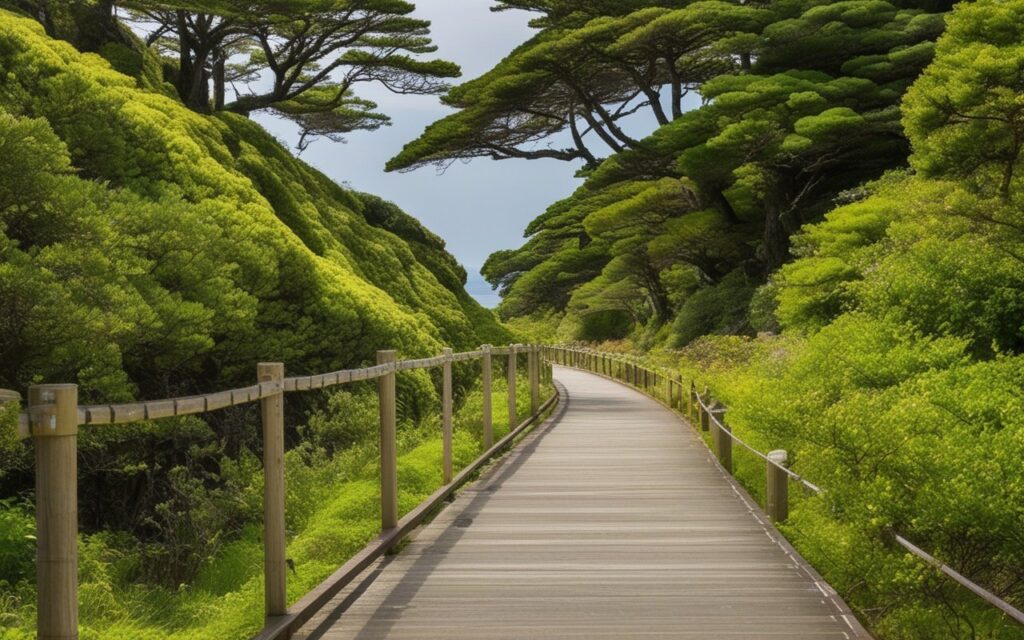
The trail climbs steadily through mixed forest — cedar, cypress, and broadleaf trees provide shade even on warm days. The path is well-trodden but can be muddy after rain. Sturdy shoes are essential.
After approximately 45 minutes of climbing, the trail reaches the Sengenyama summit (標高 186 m). The summit clearing offers a panoramic view of Sagami Bay, with Enoshima to the north, Jogashima to the south, and Mt. Fuji on the western horizon on clear days. There is a bench and a small sign marking the elevation.
Tips for This Section:
- Start by 8:00–9:00 AM to avoid the afternoon heat
- The trail can be slippery after rain — take your time on the descent
- No facilities or vending machines on the trail
- Mosquito repellent recommended in summer months
Segment 2: Ridge Walk and Descent
Sengenyama summit → Ridge trail → Farmland descent
| Detail | Info |
|---|---|
| Distance | 3 km |
| Time | 1–1.5 hours |
| Elevation loss | ~150 m |
| Difficulty | Easy to moderate |
| Trail type | Ridge path, gradually descending |
Route:
From the summit, the trail continues south along the ridge. This section is the most scenic part of the walk — the path stays at elevation for about 1 km, offering intermittent views of both Sagami Bay (west) and Tokyo Bay (east) on clear days.
The ridge section is narrower than the initial climb, with occasional tree roots crossing the path. After the ridge, the trail begins a gradual descent through the forest, eventually emerging at the edge of agricultural land.
The transition from forest to farmland is abrupt — one moment you are walking under cedar canopy, the next you are in an open landscape of vegetable fields and greenhouses. This is the Miura Peninsula’s agricultural heartland, where much of Kanagawa’s daikon radish, cabbage, and Chinese chives are grown.
- The ridge is exposed to wind — carry a light jacket
- The descent has loose gravel in places — watch your footing
- Take the last opportunity for forest shade before emerging into open farmland
- The trail becomes less distinct near the farmland edge; head toward the road visible below
Segment 3: Farmland Walking
Farmland edge → Country roads → Misaki-bound bus stop
| Detail | Info |
|---|---|
| Distance | 5 km |
| Time | 1.5–2 hours |
| Elevation | Flat (gentle undulations) |
| Difficulty | Easy |
| Surface | Paved roads, farm lanes |
Route:
This section is the least dramatic but most authentic part of the walk. The roads here are quiet — mostly local traffic heading to and from farms — and the landscape is defined by the rhythm of agriculture, Depending on the season, you will see daikon radish being harvested (winter–early spring), rice paddies being planted (late spring), or fields lying fallow under the summer sun.
The route follows prefectural roads and farm lanes southward. Navigation is straightforward — keep heading south, using the hills of Jogashima as a landmark on the horizon. The roads are flat or gently undulating, giving your legs a rest after the morning’s climb.
Approximately 3 km into this section, you will pass through the small village of Minamishitaura (南下浦), where a convenience store provides a good opportunity to refill water and buy snacks. The village also has a bus stop that connects to Misakiguchi Station.
Optional Bus Segment (Recommended):
From Minamishitaura, the remaining 4 km to Misaki Port follows a busier road with narrower sidewalks. For a more pleasant walking experience, consider taking the bus for this segment:
Bus: Minamishitaura → Misakiguchi Station
Time: 10 minutes
Cost: ¥200–250 (IC card accepted)
Frequency: Every 20–30 minutes
This bus segment bridges the least scenic part of the route and drops you at Misakiguchi Station, which is a short walk from Misaki Port and the Jogashima Island bridge.
- Sun protection is essential — there is almost no shade on the farmland roads
- Wave back at the farmers — they are friendly but busy
- The convenience store in Minamishitaura has restrooms (ask at the counter)
- Check the bus timetable at the Minamishitaura stop if you plan to ride
Segment 4: Misaki Port and Finish
Misakiguchi Station → Misaki Port → (Optional) Jogashima Island
| Detail | Info |
|---|---|
| Distance | 1.5 km (to port) + 5 km optional (Jogashima loop) |
| Time | 20 minutes (to port) + 2–3 hours optional |
| Difficulty | Easy |
| Surface | Paved paths, sidewalks |
Route:
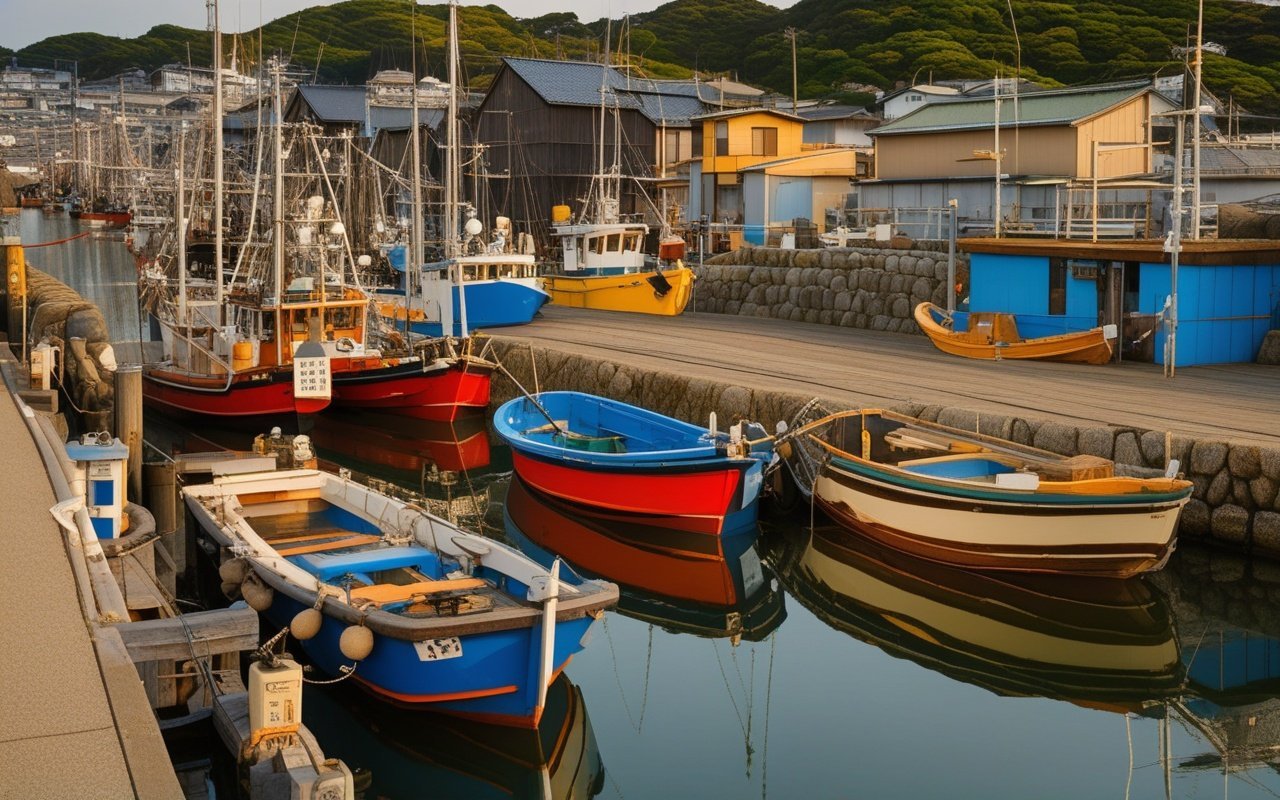
From Misakiguchi Station, it is a 20-minute walk (or 5-minute bus ride) to Misaki Port (Misaki (三崎)港). The port is the peninsula’s premier destination for fresh tuna — the harbour is lined with restaurants serving maguro-don (tuna bowls), sushi, and grilled tuna steaks.
The fish market is busiest in the morning, but the restaurants serve lunch from 11:00 AM onward. If you arrive by noon, you will find the restaurants in full swing with a lively atmosphere.
Lunch Recommendations:
| Restaurant | specialty | Price | Notes |
|---|---|---|---|
| Maguro no Sato | Tuna bowl (maguro-don) | ¥1,500–2,000 | Fast, reliable, popular |
| Misaki Kō | Sushi set | ¥2,000–3,500 | Higher quality, reservation recommended |
| Port-side stalls | Grilled tuna skewers | ¥500–800 | Quick, casual, eat while walking |
Optional Extension — Jogashima Island:
If you have energy remaining, cross the bridge to Jogashima Island for a 2–3 hour loop walk. The Jogashima hiking trail covers the full circuit, and the Jogashima lighthouse is the island’s highlight.
From the port, Jogashima is:
- Walk: 15 minutes across the bridge
- Bus: 5 minutes from Misaki Port bus stop (¥150)
Practical Information
Full Route Summary
| Segment | Distance | Time | Terrain |
|---|---|---|---|
| 1: Hayama → Sengenyama | 4 km | 1.5–2 h | Forest trail, uphill |
| 2: Ridge → Farm descent | 3 km | 1–1.5 h | Ridge path, downhill |
| 3: Farmland walking | 5 km | 1.5–2 h | Paved roads, flat |
| 3b: Bus option | 4 km | 10 min | Bus ride |
| 4: Misaki Port | 1.5 km | 20 min | Paved paths |
| Total (walking) | 13.5 km | 4.5–6 h | — |
| Total (with bus) | 9.5 km + bus | 3.5–4.5 h | — |
Start Time Recommendations
| Start | Finish (walking) | Finish (with bus) | Notes |
|---|---|---|---|
| 7:00 AM | 1:00–2:30 PM | 11:30 AM–12:30 PM | Best for summer heat avoidance |
| 8:00 AM | 2:00–3:30 PM | 12:30–1:30 PM | Recommended — balanced timing |
| 9:00 AM | 3:00–4:30 PM | 1:30–2:30 PM | Good for shorter days |
| 10:00 AM | 4:00–5:30 PM | 2:30–3:30 PM | Tight before sunset |
What to Bring
Essential:
- Sturdy walking shoes (trail section has uneven footing)
- Water (1L minimum, refill at Minamishitaura convenience store)
- Sunscreen and hat (open farmland sections have no shade)
- Light jacket or windbreaker (ridge section is exposed)
- Cash (lunch and bus fare — IC card works for bus)
- Phone with Google Maps downloaded offline

Recommended:
- Walking poles (helpful on the forest descent)
- Insect repellent (summer months)
- Snacks (trail mix, energy bars)
- Small towel (for humidity)
- Change of socks (for after the walk)
Getting to the Start
To Hayama (start):
From Tokyo Station:
1. JR Yokosuka Line to Kamakura (55 min, ¥1,040)
2. JR to Zushi Station (5 min, ¥170)
3. Keikyu Bus to Isshiki or Hayama stop (15 min, ¥230)
Total: ~80 minutes, ¥1,320

From Yokohama Station:
1. JR Yokosuka Line to Zushi Station (25 min, ¥420)
2. Keikyu Bus to Hayama (15 min, ¥230)
Total: ~45 minutes, ¥650
Getting Back from the Finish
From Misaki Port / Misakiguchi Station:
To Tokyo:
- Keikyu Line: Misakiguchi → Shinagawa (75 min, ¥1,100)
- Via Yokohama: Misakiguchi → Yokohama (55 min, ¥750)
Last train: ~11:00 PM (check schedule)

To Yokohama:
- Keikyu Limited Express: Misakiguchi → Yokohama (55 min, ¥750)
Last train: ~11:30 PM by Bus:
- Keikyu Bus: Misaki Port → Misakiguchi Station (5 min, ¥150)
Seasonal Considerations
Spring (March–May):
- Best weather for walking
- Cherry blossoms along the farmland roads
- Comfortable temperatures (15–22°C)
- Trail may be muddy from spring rain

Summer (June–August):
- Hot and humid (30–35°C)
- Start before 7:00 AM to avoid heat
- Mosquito repellent essential
- Heavy rain possible (check forecast)

Autumn (September–November):
- Clear skies, comfortable temperatures
- Best Mt. Fuji visibility from Sengenyama
- Dried grass on the ridge can be slippery
- Daylight shorter (finish by 4:30 PM)

Winter (December–February):
- Cold but clear (5–15°C)
- Best views of Mt. Fuji and the bay
- Trail can be frosty in the morning
- Lunch at Misaki Port is especially rewarding after a cold walk
Safety Notes
⚠️ The forest trail section has limited mobile reception
⚠️ The ridge is exposed to strong winds in winter
⚠️ Farmland roads have occasional farm vehicle traffic — walk facing traffic
⚠️ No emergency services on the trail section
⚠️ Tell someone your planned route and expected finish time
⚠️ Check the weather forecast — cancel if heavy rain is predicted
⚠️ The trail section can be slippery after rain — turn back if conditions worsen
Frequently Asked Questions
Q: Is this route suitable for beginners?
A: The farmland and Misaki sections are easy, but the Sengenyama climb is moderate. Beginners should allow extra time and take the bus option from Minamishitaura.
Q: Can I do this route in reverse (Misaki → Hayama)?
A: Yes, but the walk would be more challenging because the Sengenyama climb would come at the end of the day when you are tired. Start from Hayama for the best experience.
Q: Are there restrooms along the route?
A: There are no restrooms on the trail section. Restrooms are available at convenience stores in Hayama (start) and Minamishitaura (midpoint), and at Misakiguchi Station and Misaki Port (finish).
Q: Can I bring a dog?
A: The farmland roads and Misaki Port area are dog-friendly, but the forest trail section has uneven terrain that may be challenging for dogs. Keep dogs leashed at all times.
Q: Is the route well-signposted in English?
A: No. The Sengenyama trail markers are in Japanese only. Google Maps works for navigation on the road sections. Download offline maps before starting.
🌟 Share Your Experience
Walked this route? Found a better connection between Hayama and Misaki? Join our community forum to share your route tips!
Walking from Hayama to Misaki Port is not a classic hiking trail in the traditional sense — it is a patchwork of forest paths, country roads, and bus connections that together tell the story of the Miura Peninsula. The reward is an understanding of the landscape that you cannot get from a train window: the smell of cedar on the ridge, the sight of farmers working the daikon fields, and the taste of fresh tuna as a finishing-line celebration.
For more ways to explore the Miura Peninsula, read our Hayama hidden beaches guide, the Hayama hidden cafes guide, and the Misaki Port food guide.
⏰ Best Time to Visit
Early morning (8–10 AM): Peaceful atmosphere, fewer crowds, perfect for photos Late afternoon (4–6 PM): Beautiful lighting, local life, less crowded than midday
🎯 What I Recommend
- Don’t rush: Take your time to explore the side streets and hidden spots
- Talk to locals: They often know the best lesser-known spots that aren’t in guidebooks
- Try the local specialties: Each area has its own unique food and souvenirs
⚠️ Things to Watch Out For
- Some shops close on weekdays or have irregular hours
- Parking can be challenging during peak seasons
- Cash is still king at many smaller establishments
Conclusion
Whether you are planning exploring Hayama for the first time or returning for another visit, taking a little extra time to go beyond the obvious sights makes all the difference. During my visit to Hayama I went with a rough plan and found that leaving room to wander made the trip far more memorable. I hope this guide helps you build an itinerary that fits your pace, and that your time in Kanagawa leaves you with memories worth coming back for.